Project overview
I developed maps, an economy and narrative material for a collaborative Fate tabletop game, connecting survival pressures with player-led investigation and negotiation in The Betrayal.
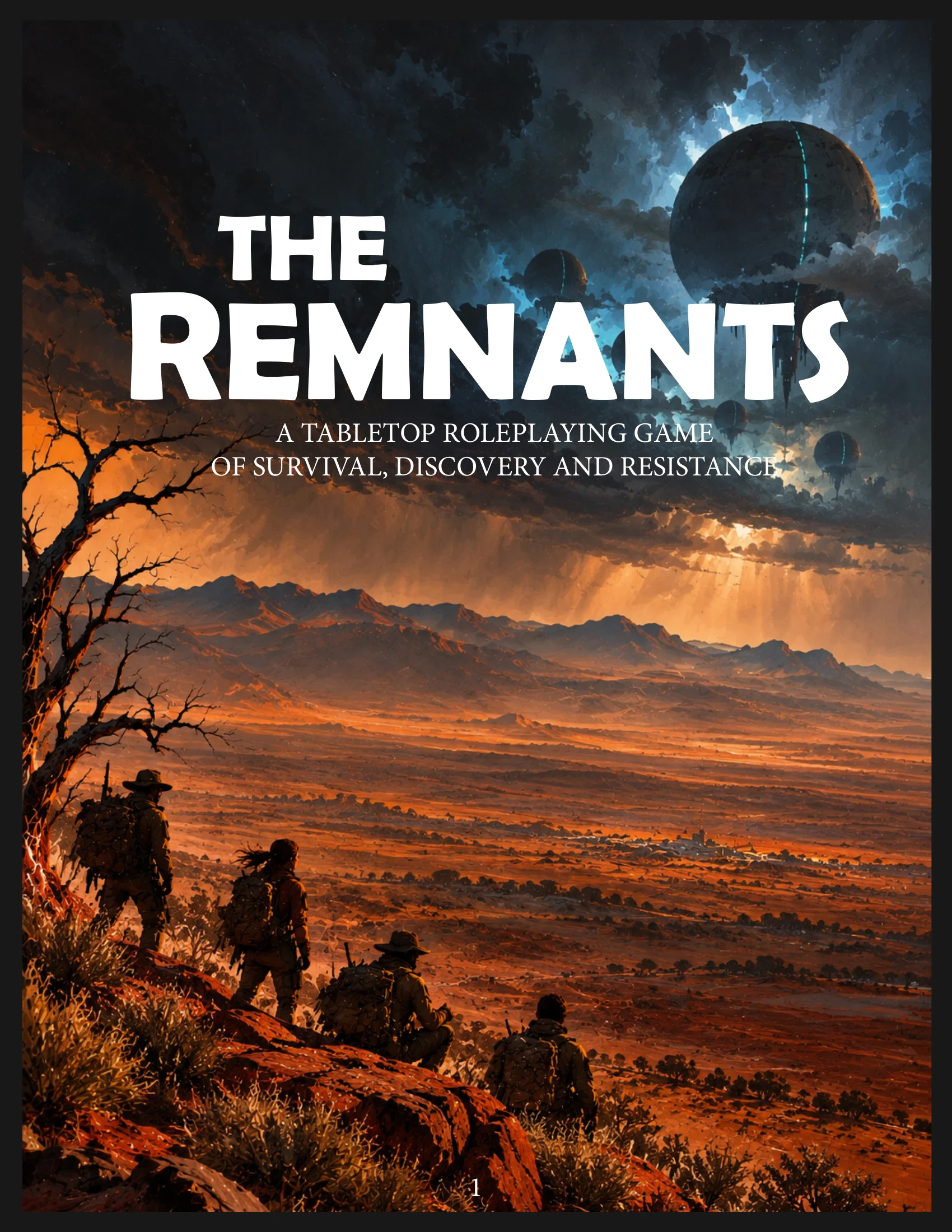
Complete gamebook · PDF · 68 pages
Supporting detail
My work covered the maps, economy, worldbuilding, GM guidance, narrative tensions and The Betrayal adventure.
These examples show how I connected the setting's resources and relationships with opportunities for exploration, investigation and player choice.
Design challenge
A shared world with room for choice.
Our aim was to create a shared world that could support different adventures and player decisions.
The challenge was to make its survival themes playable through relationships, competing needs and consequences, while leaving the group free to decide how each conflict should unfold.
My contribution
Turning the setting into playable decisions.
- 01
I developed maps and worldbuilding that connect settlements, essential resources and threats, giving players practical reasons to explore and care about the communities they encounter.
- 02
I developed an economy built around casino chips, barter and scarce supplies, making trade part of the setting's survival pressures and relationships between communities.
- 03
I wrote GM guidance and six connected narrative tensions to help the GM develop situations that players could investigate, negotiate or resolve in their own way.
- 04
I wrote The Betrayal around three leaders with competing aims and incomplete knowledge.
Evidence, separate trust tracking and open outcomes help the GM respond to the players' investigations and commitments.
Project focus
The core areas.
Reflection
Planning for visual consistency.
The main challenge was keeping the AI-generated artwork consistent across the gamebook.
I learned the value of sourcing references and defining the visual direction early, giving the generation process a broader foundation instead of repeatedly drawing on a small pool of ideas.
Team credits
Dylan Rabie
Team & Document Design Lead
The Dead Coast
Acelin Berthelot
World Building & Story Designer
Maps, economy and worldbuilding · GM guidance and narrative tensions · The Betrayal
Edward Masiwel
Geography & World Builder
Signal from Pine Gap
Jessica Huynh
Character & Lore Designer
The Chef's Truce
Toby Poole
Character & Lore Designer
Chips Down
Supporting evidence
From maps and economy to player-led stories.
This carousel covers my work on the maps, economy, worldbuilding, GM guidance, narrative tensions and The Betrayal.
Together, they give the group places to explore, pressures to respond to and room to shape its own story.
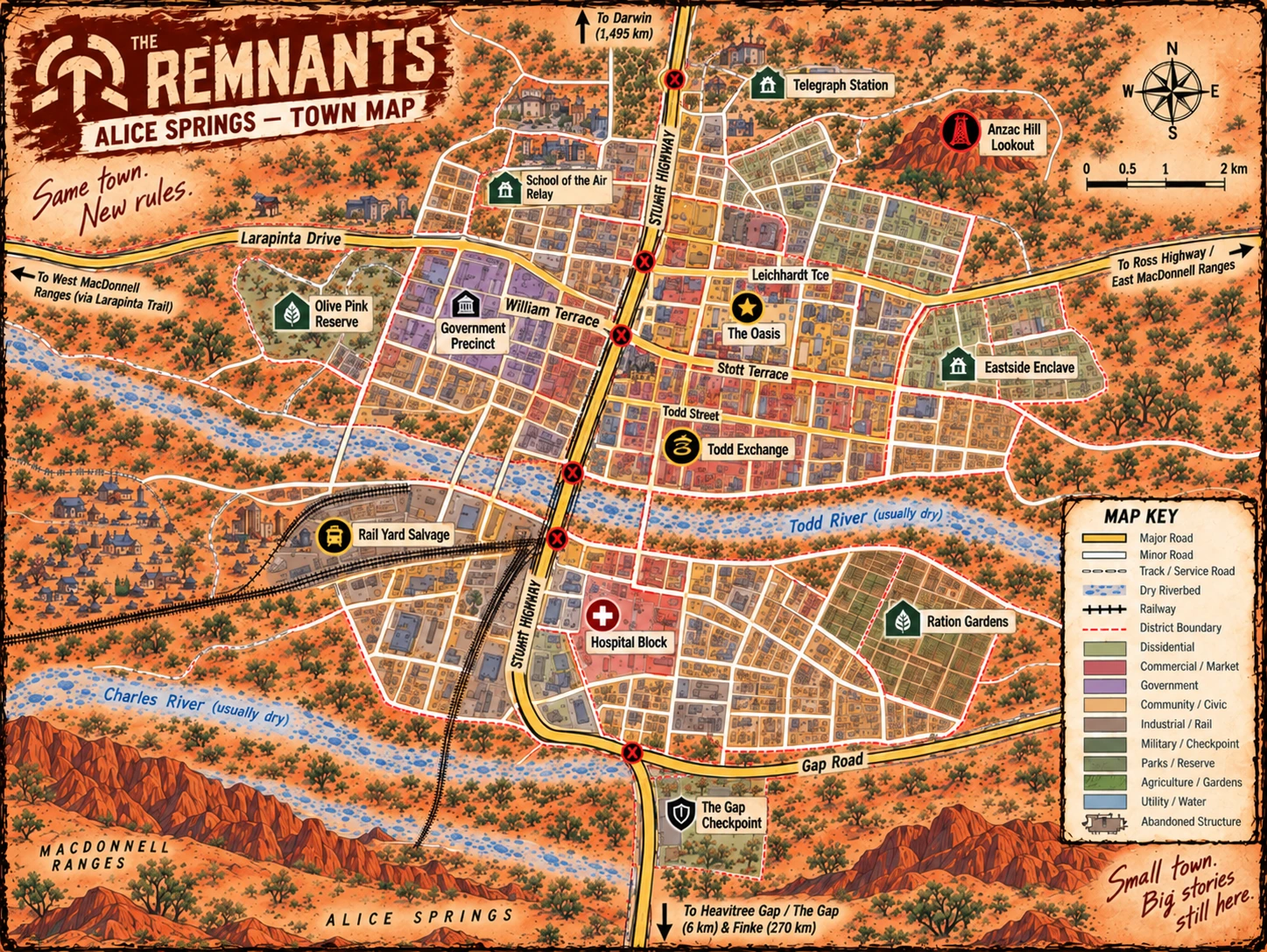 Maps: Navigating Alice Springs.
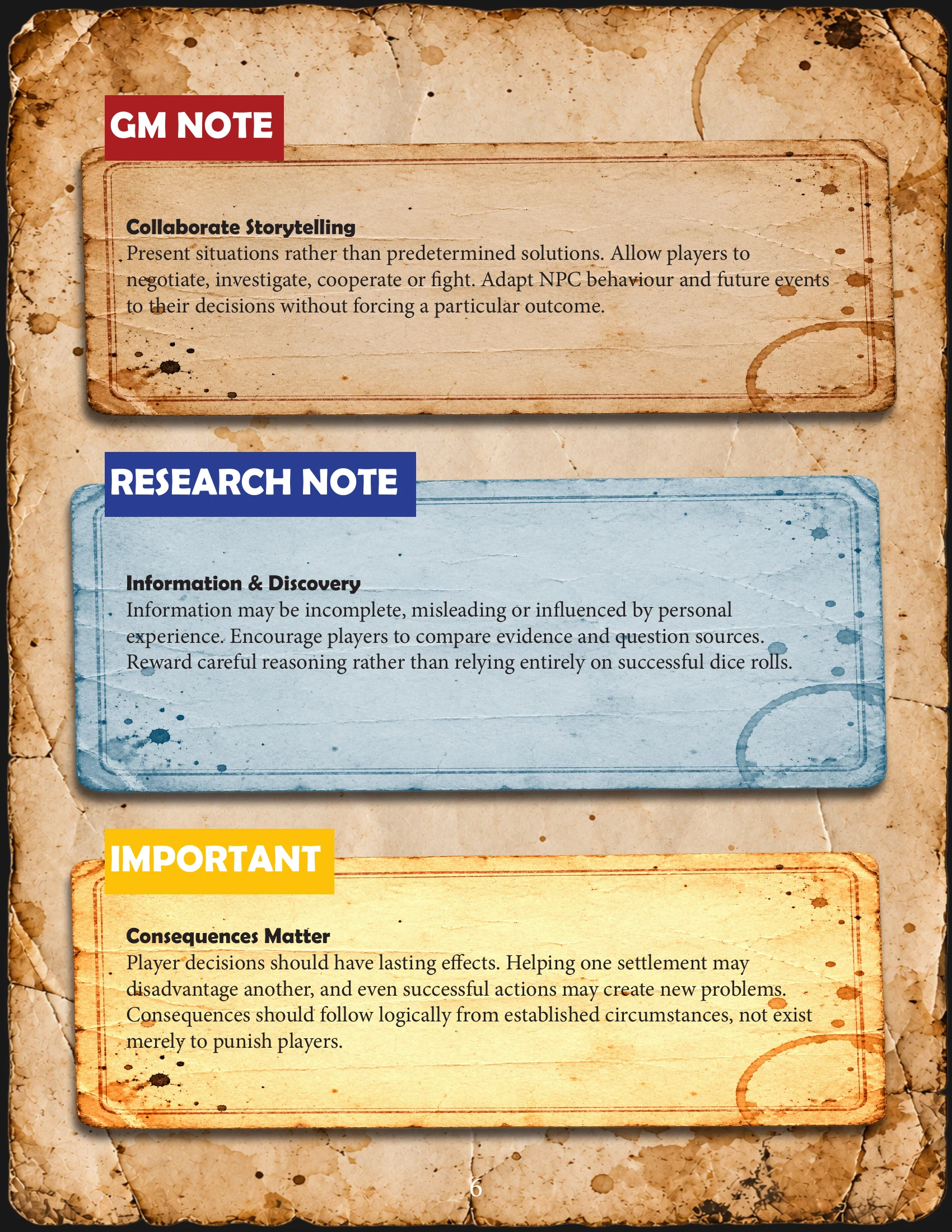 GM guidance: Player-led storytelling.
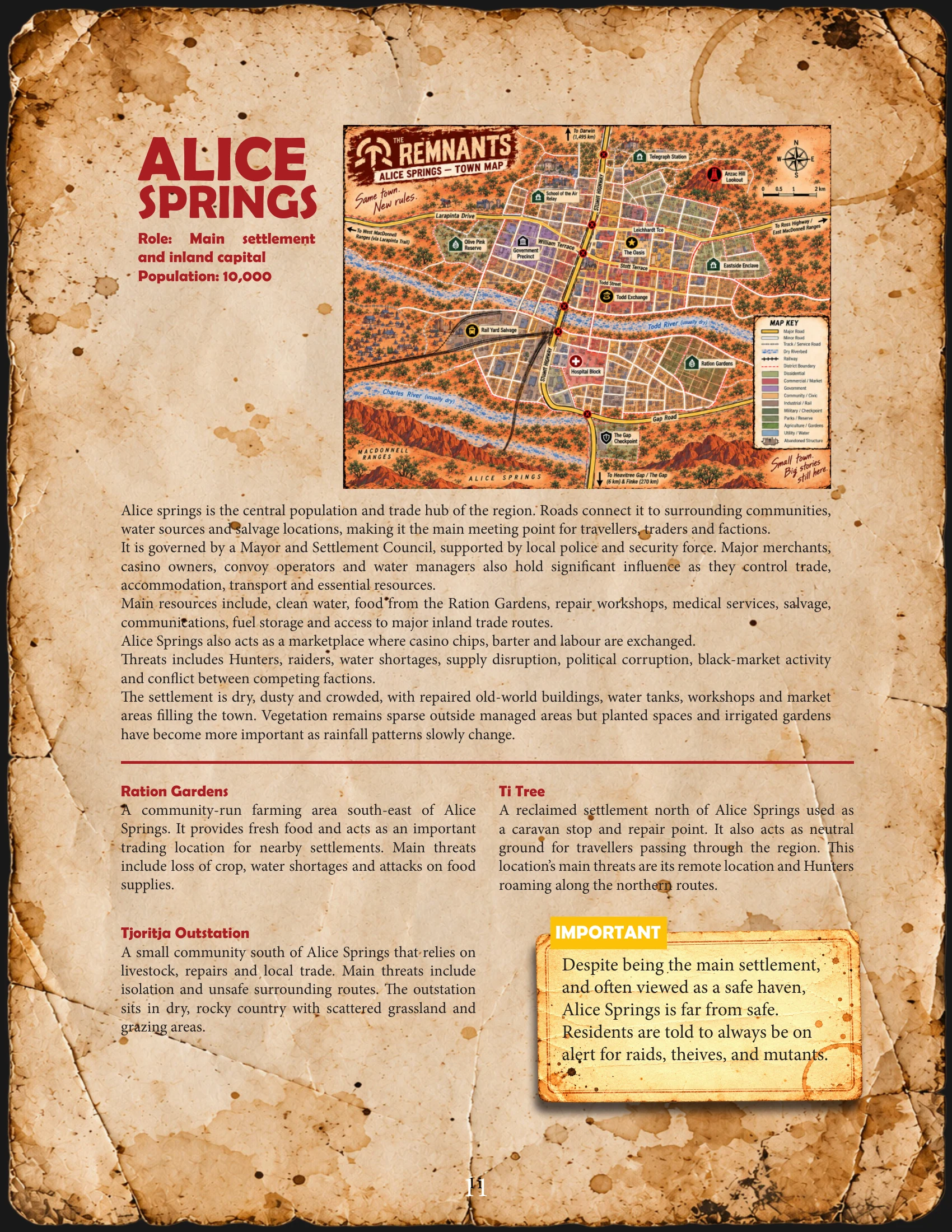 Worldbuilding: Communities with a purpose.
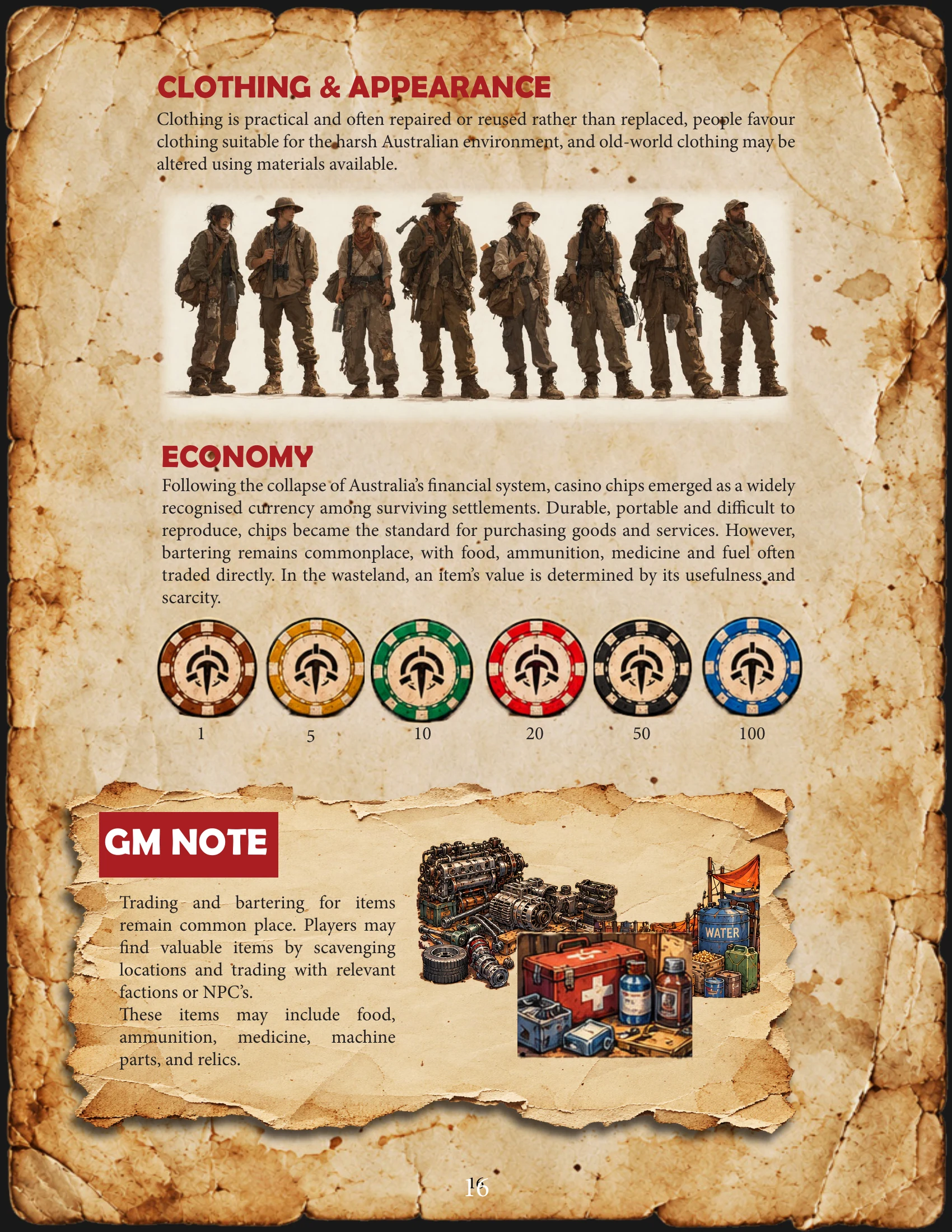 Economy: Trade shaped by survival.
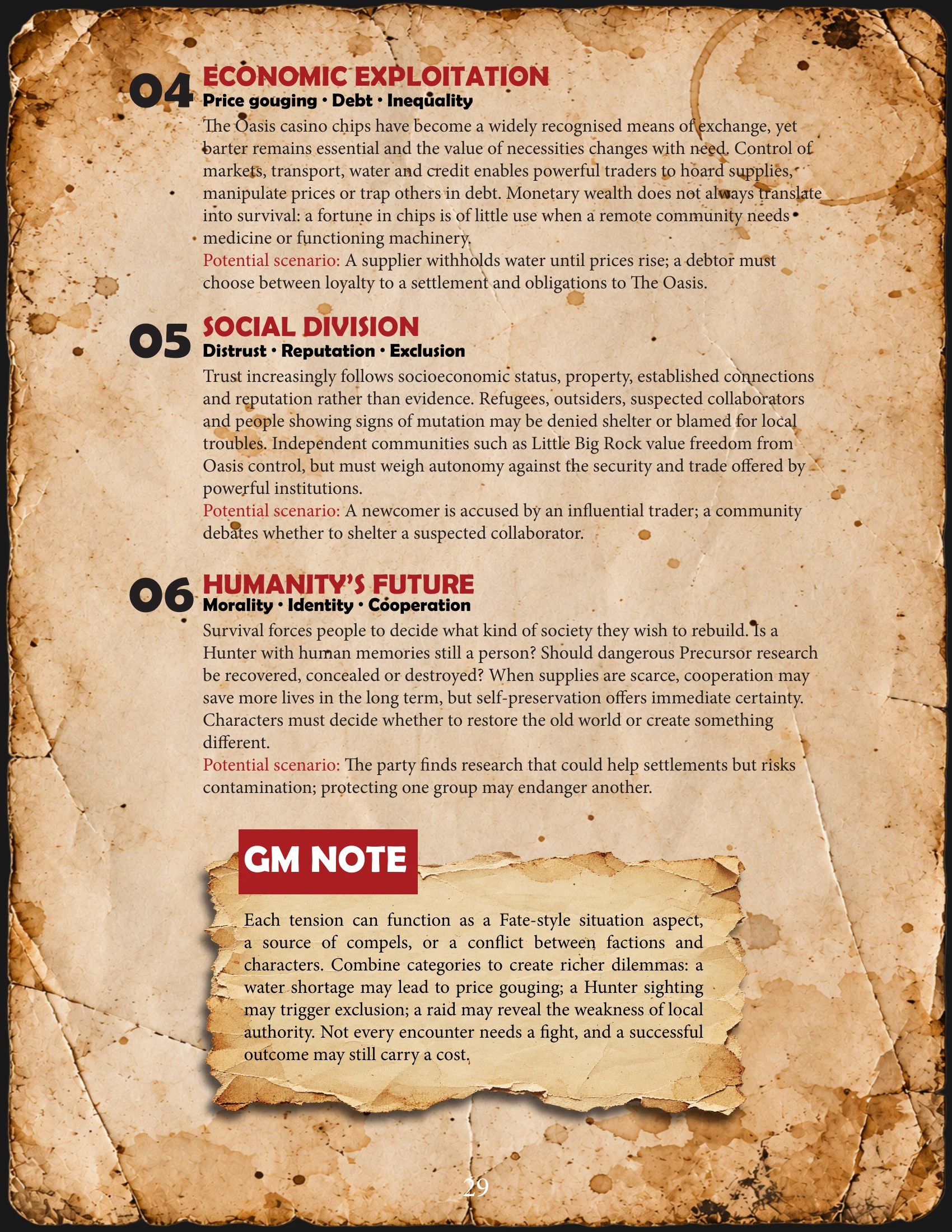 Narrative tensions: Pressures that drive adventure.
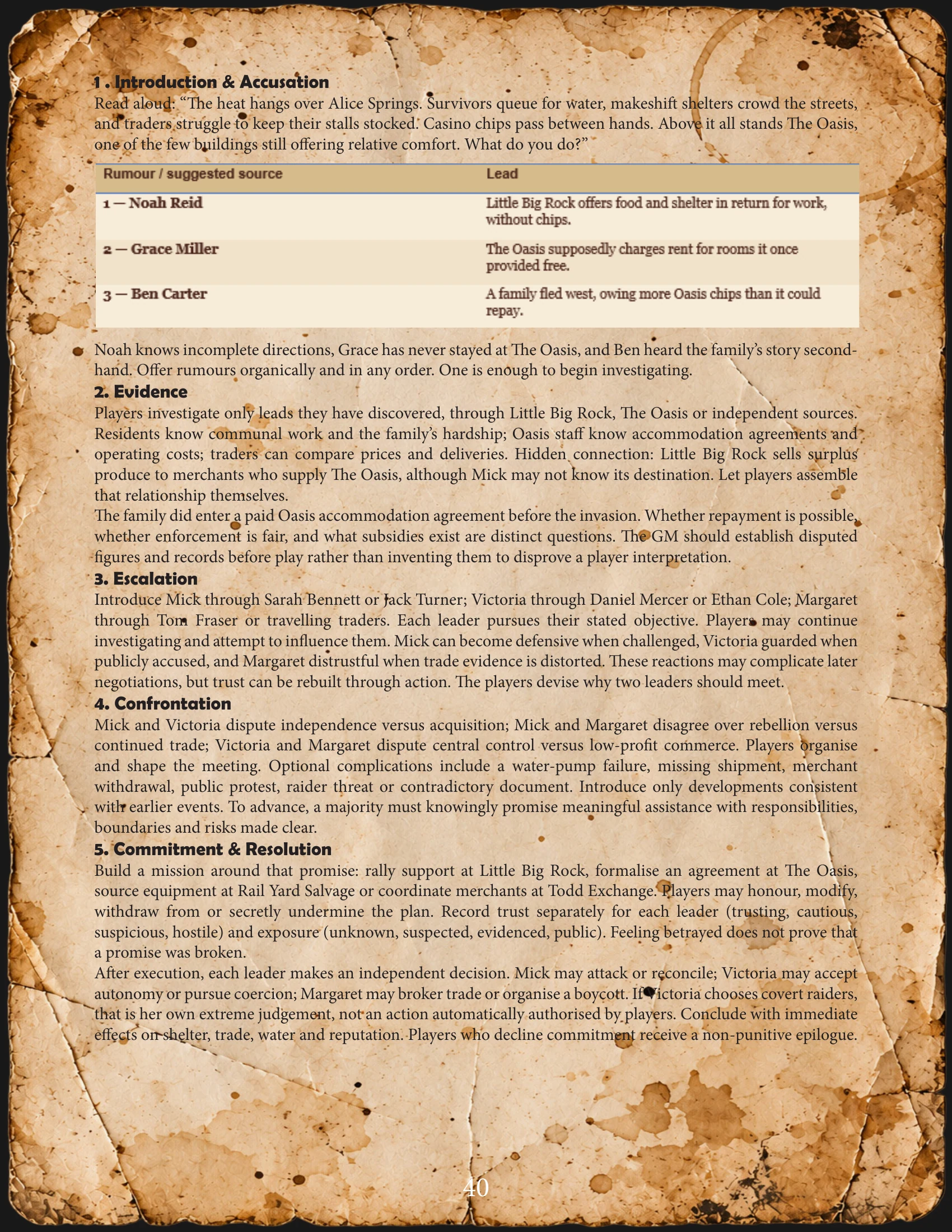 The Betrayal: Following the evidence.
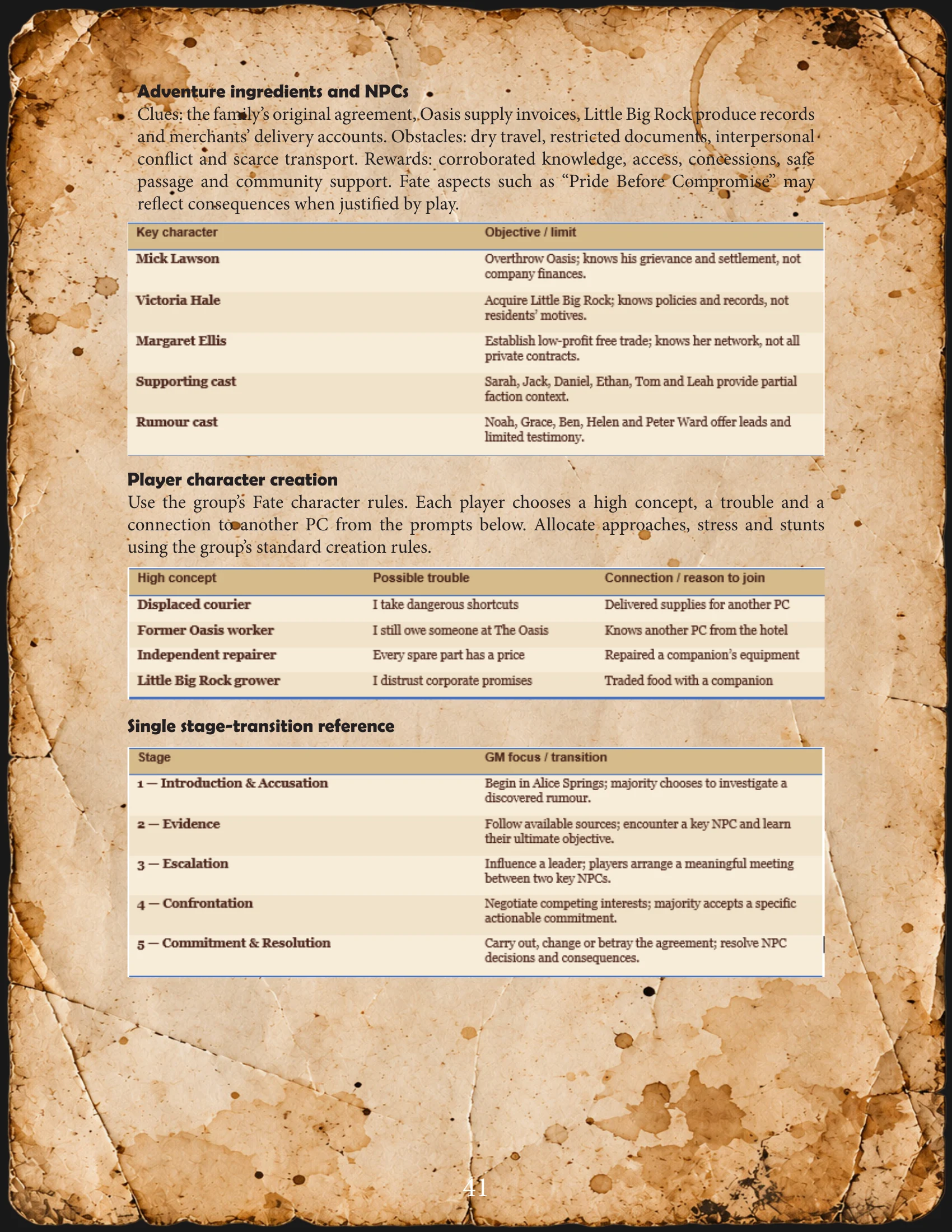 The Betrayal: Supporting the GM.
Evidence 01 / 08
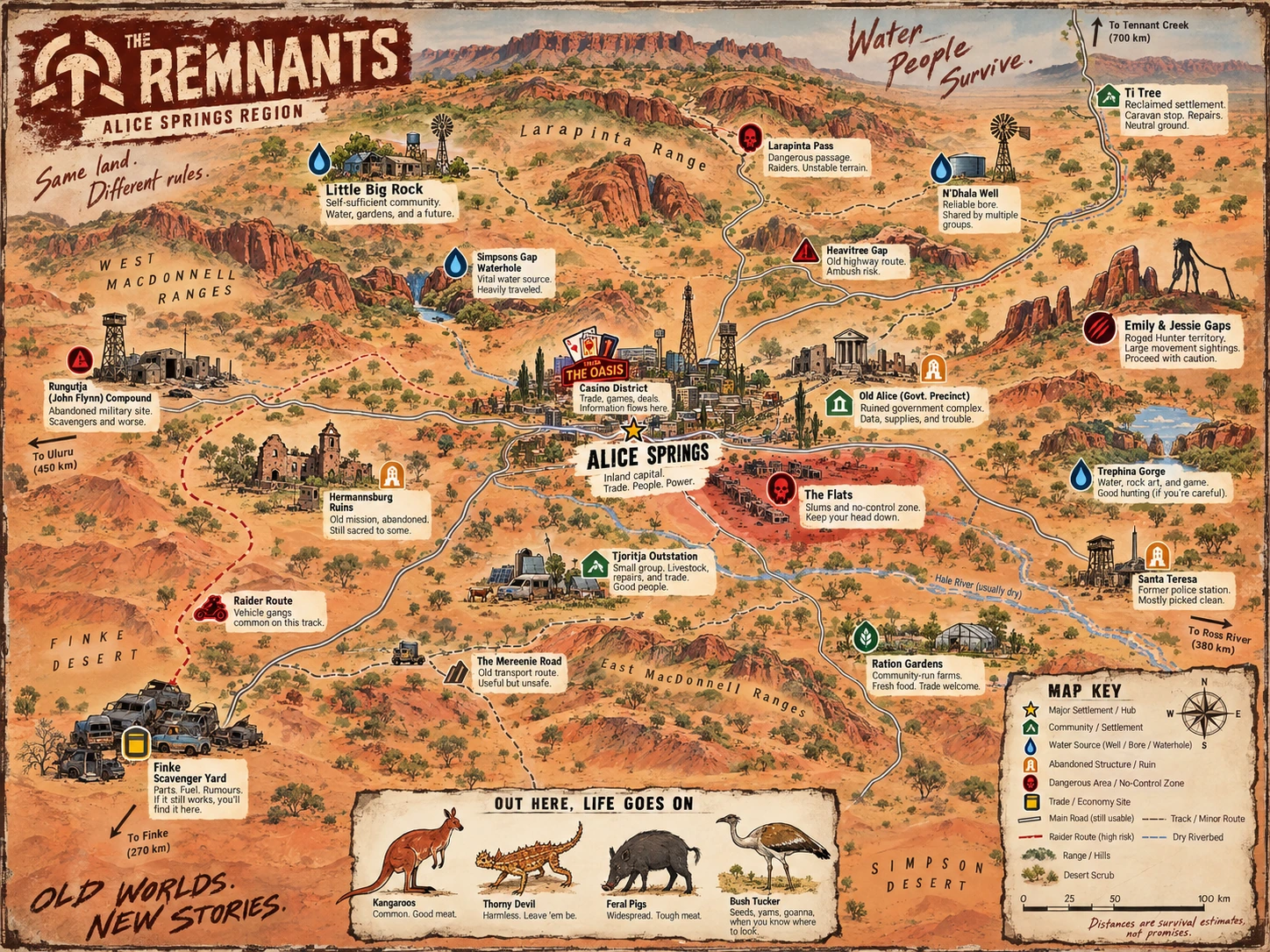
Maps: Planning regional travel.
I developed the regional map around settlements, water sources, salvage sites and dangerous routes.
Giving each location a practical purpose helps players decide where to travel, what supplies they need and which risks they are willing to take.
Evidence 1 of 8: Maps: Planning regional travel.