Project overview
I created an eight-legged mechanical spider in Unity using custom vector and matrix maths for procedural modelling, inverse-kinematics leg movement, coordinated animation states, camera framing, and surface shading.
- UnityScene rendering, input, and camera presentation
- C#Custom vectors, matrices, meshes, and animation states
- Visual StudioDevelopment environment
- Git / GitHubVersion control




Supporting detail
Alongside the two procedural characters, I completed workshop exercises in transformations, articulation, geometric tests, curves, shaders, and numerical integration.
Assignment brief
Articulated movement through custom maths.
The assignment asked me to build controllable articulated characters in Unity and C# using my own transformation matrices and functions.
It progressed from hierarchical movement and jumping to collapse-and-recovery controls, two-player camera framing, and an advanced character with branching limbs and custom pixel shading.
The movement had to be generated in code without Unity's built-in transformation functions or pre-built animations.
My implementation
From mesh vertices to coordinated movement.
- 01
I generated the mech, lamp, and ground from procedural meshes, transforming their original vertices with my own vector and matrix classes before passing the results to Unity for rendering.
- 02
I built an alternating gait around planted foot contacts and calculated knee positions, using inverse kinematics to keep the mech's leg segments connected as its body moved.
- 03
I coordinated walking, staged turns, jumping, collapse, and recovery through separate movement states, with independent keyboard controls for the mech and lamp.
- 04
I added camera framing based on both avatars' bounds, an overhead inset for inspecting the legs, and a custom shader with patterned armour and a pulsing emissive sensor.
Project focus
The core areas.
Reflection
Balancing enthusiasm with completion.
The main challenge was finding inspiration to finish QUT Jr, the lamp, while I was excited to work on QUT Jr Advanced, the spider mech.
My focus had shifted towards the advanced character, so the challenge became balancing that enthusiasm with completing both parts of the project.
Animation references
References behind the movement.
- Luxo Jr.
I used the Luxo Jr. movie as a reference for QUT Jr, the lamp.
Its bending, head rotation, and spring-like actions informed the lamp's articulation, independent head nod, and hopping movement. - Spider walk cycle - top view
I used Max Leroux's spider walk video as a reference when developing QUT Jr Advanced's walking animation.
The top-down view helped me study how the spider's legs move together throughout the walk cycle.
Supporting evidence
Workshop experiments and surface shading.
I explored the maths behind graphics through workshop exercises in joint movement, shaders, curves, intersections, integration, and orbital motion.
These examples sit alongside the finished surface shader used on the spider mech.
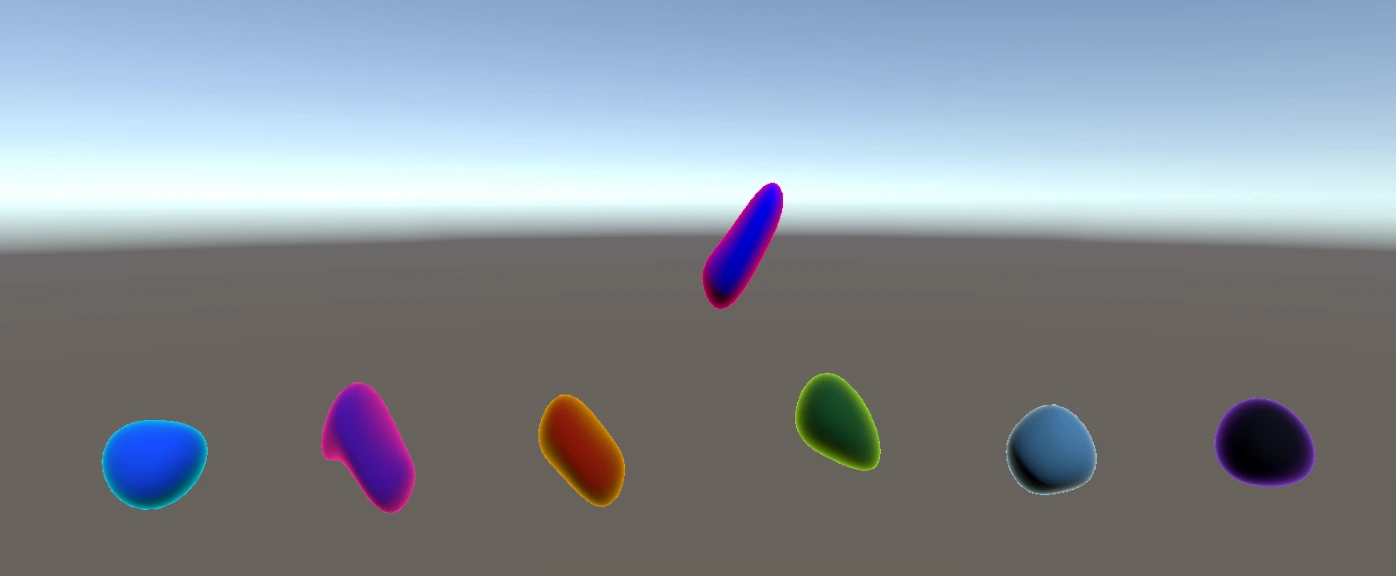 Shaders shape the surface and silhouette.
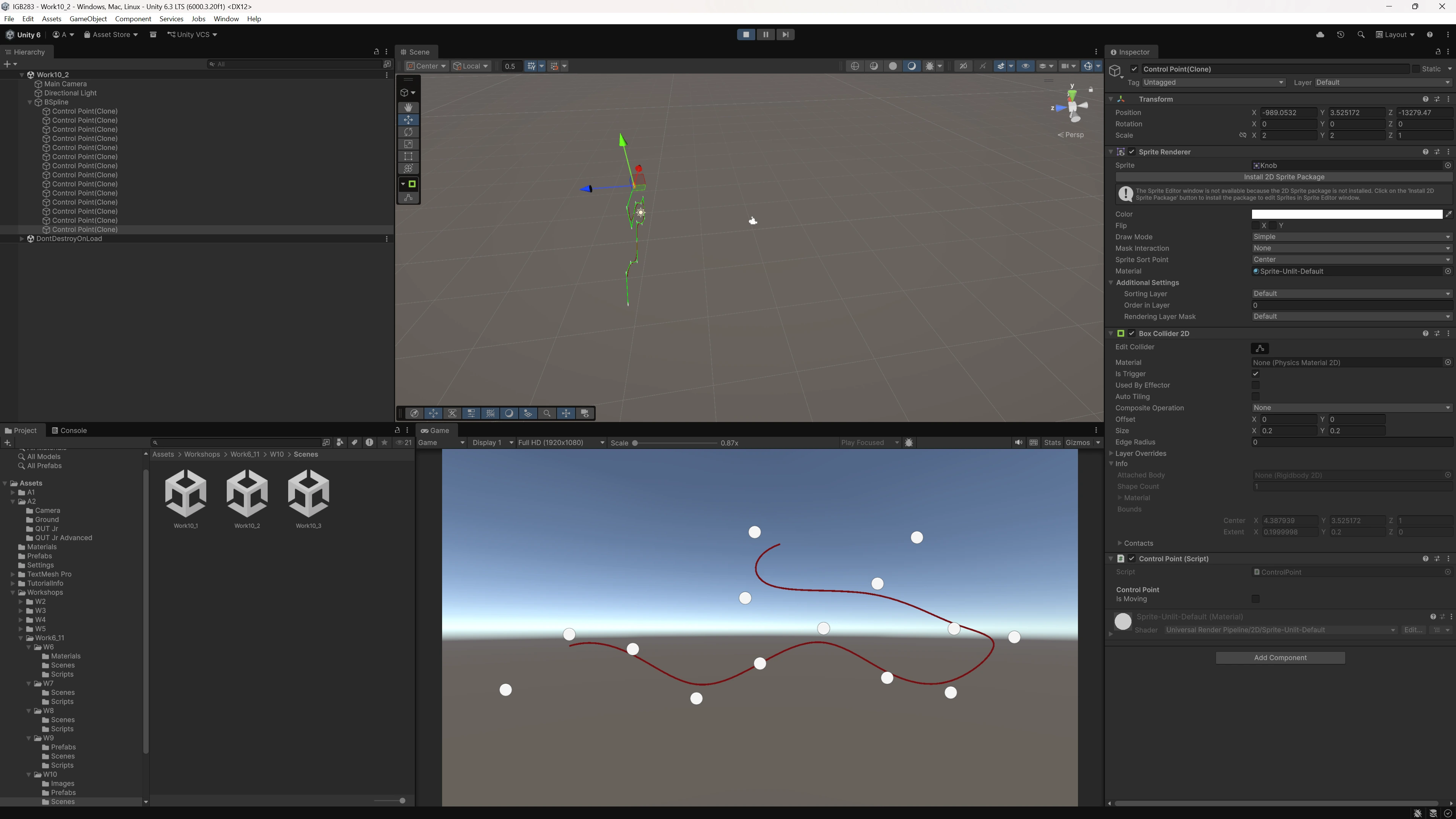 Control points shape a continuous curve.
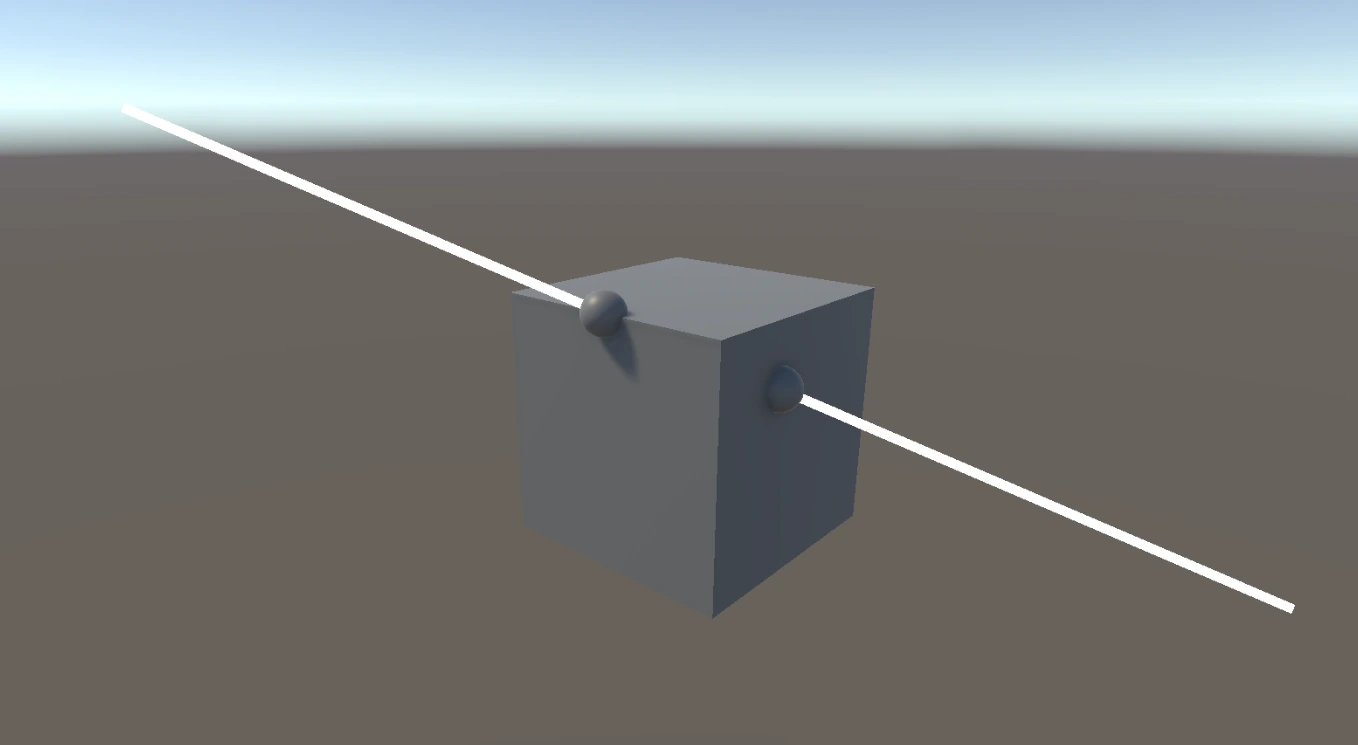 Intersection tests locate surface crossings.
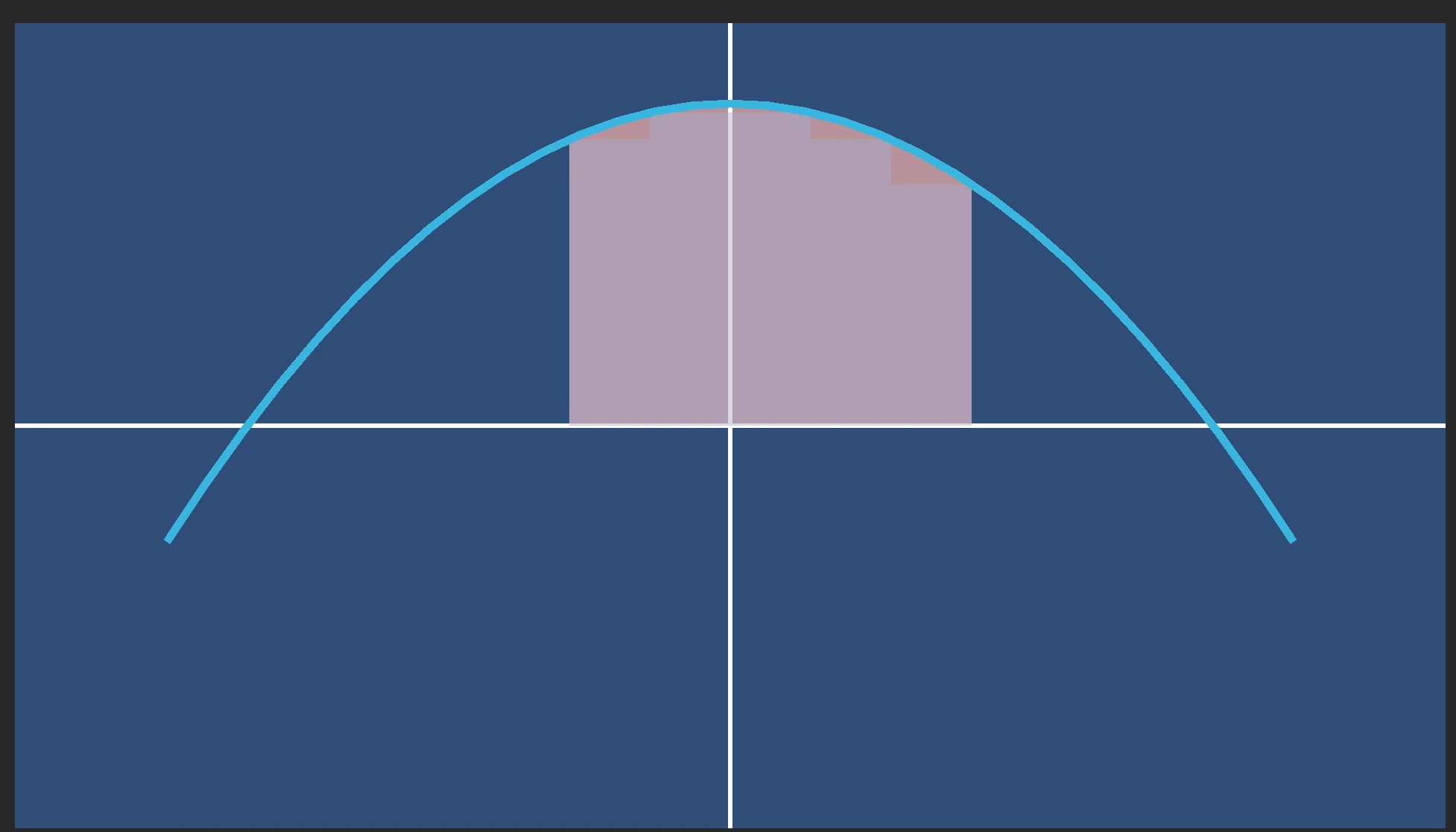 Numerical integration becomes visible.
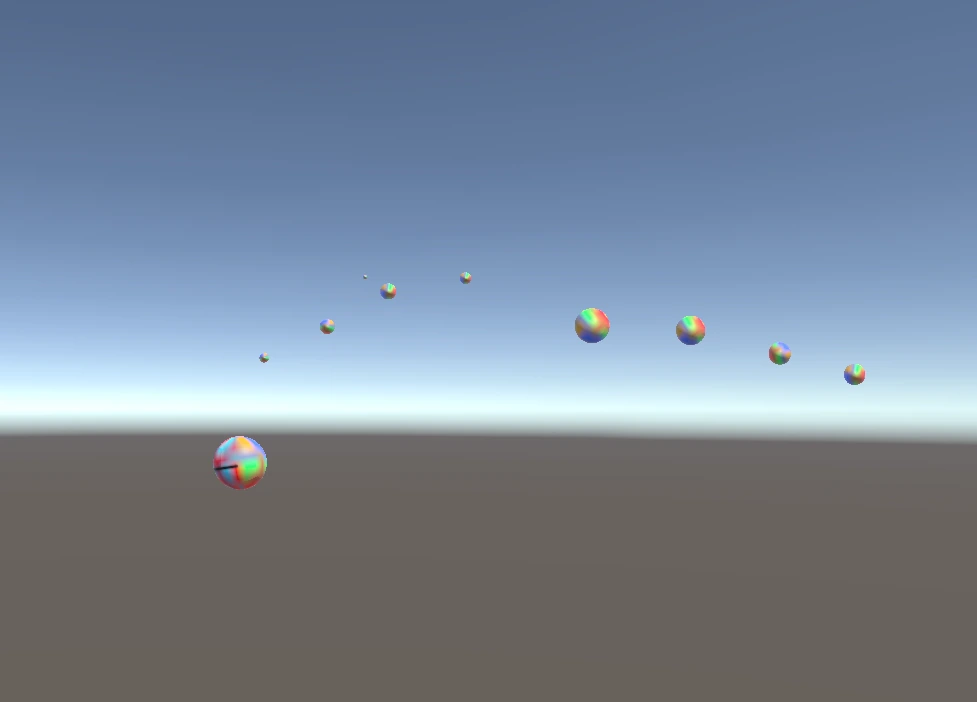 Orbit and spin use separate transforms.
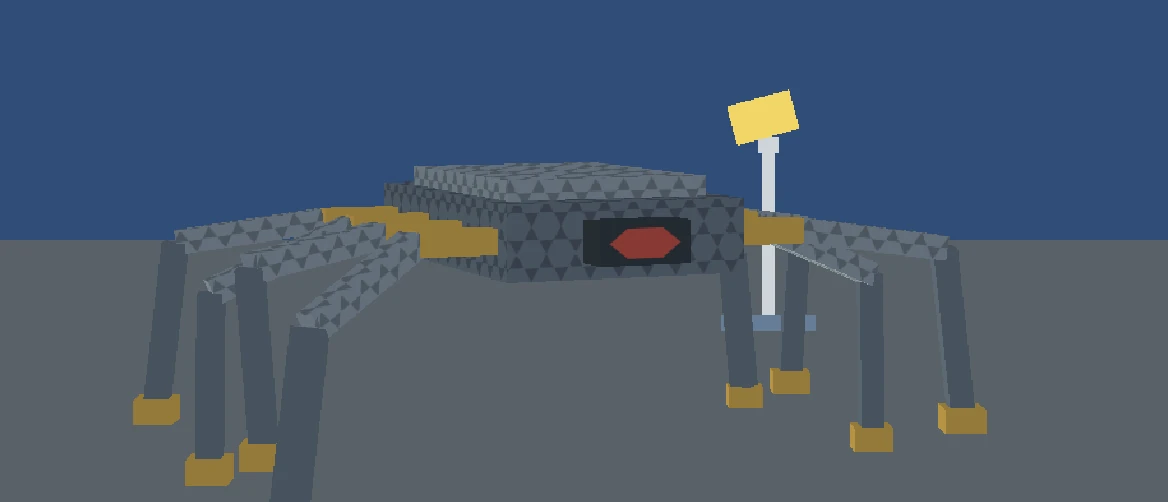 Surface shading adds mechanical detail.
Evidence 01 / 07
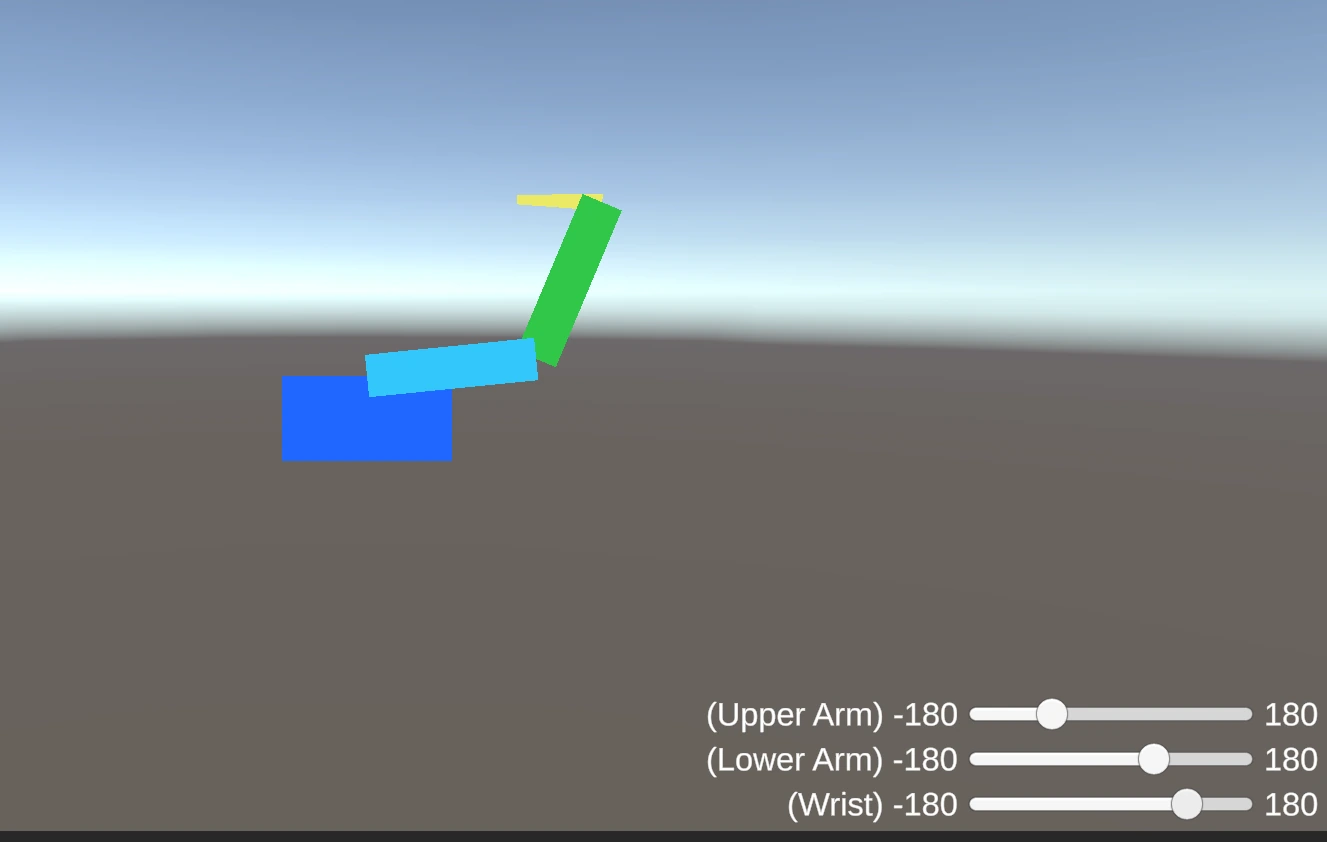
Connected joints move as a hierarchy.
I built a robot arm with sliders for its upper arm, lower arm, and wrist.
Rotating one joint also moves the parts attached to it, making it easy to see how each joint affects the arm's pose.
Evidence 1 of 7: Connected joints move as a hierarchy.