Project overview
An action RPG balance pass spanning equipment, skills, quest rewards, and character progression, completed alongside a custom playable character and a new set of items and abilities.
- UnityVisual scripting implementation
- Microsoft ExcelBalance matrices


Supporting detail
The supporting material is deliberately compact: it connects the decisions, system boundaries, and lessons without competing with the primary project evidence.
Academic project
The design challenge.
The project required a balance pass over a near-finished action RPG alongside the creation of a custom playable character, items, and abilities.
A simple weighting system already existed for item statistics; the challenge was to extend that logic across equipment, skills, quest rewards, and character levels while preserving clear trade-offs between build choices.
Design direction
How the problem was approached.
- 01
Expand the existing item-stat weighting into a shared point model for equipment, skills, quest rewards, and character levels.
- 02
Differentiate weapon and armour types, rings, and amulets through statistical strengths and trade-offs so players could optimise toward different priorities.
- 03
Keep resale values relatively high at 50% of item value or purchase price.
Given the short expected playtime, this makes equipment experimentation less costly and encourages regular shop use. - 04
Reserve the strongest equipment for enemy drops, then distinguish those rewards with unique flavour text and more distinctive icons.
Project focus
The core areas.
Reflection
What this work adds.
The progression structure was designed to support two different paths: flexible shop equipment for experimentation and stronger, more distinctive enemy-drop rewards for players pursuing an optimised build.
The project also showed me that balance depends on how item slots, economy, progression, and presentation work together, not only on the numbers in one table.
Supporting evidence
Balance rules made visible.
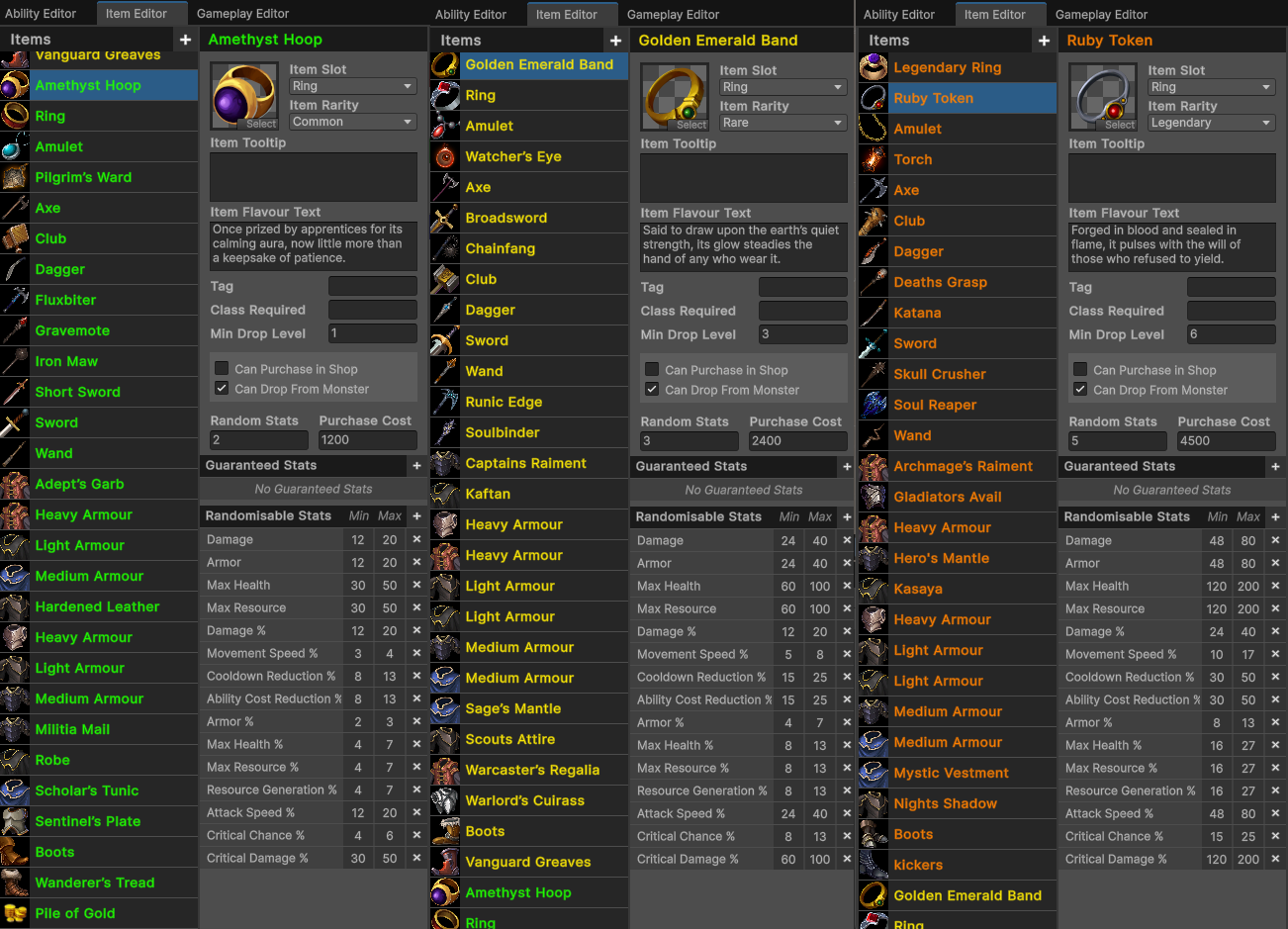
These working artefacts document the equipment portion of the wider balance pass, connecting item-editor configurations to stat costs, equipment types, rarity ranges, prices, resale values, and drop rules.
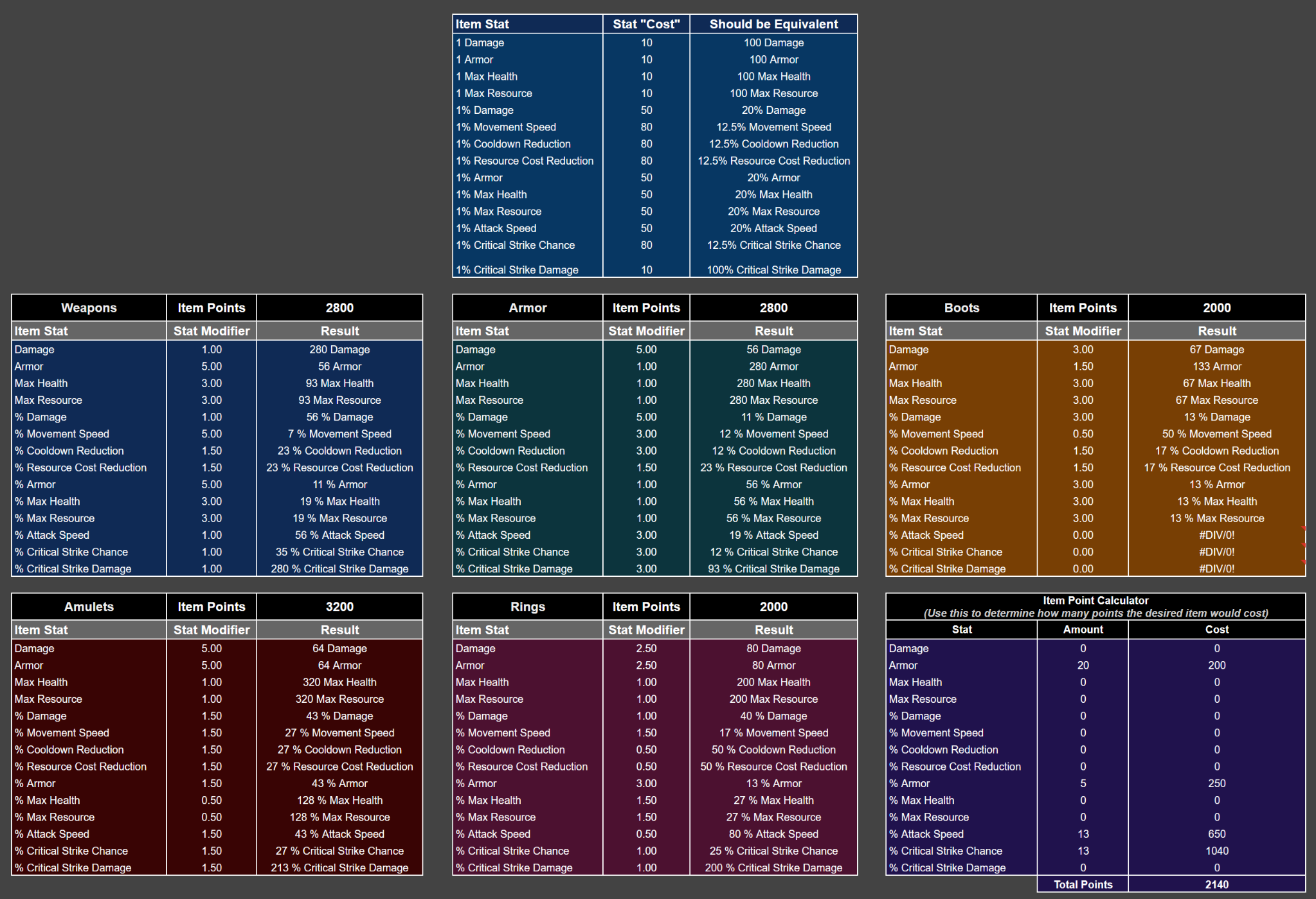 A shared stat-cost model.
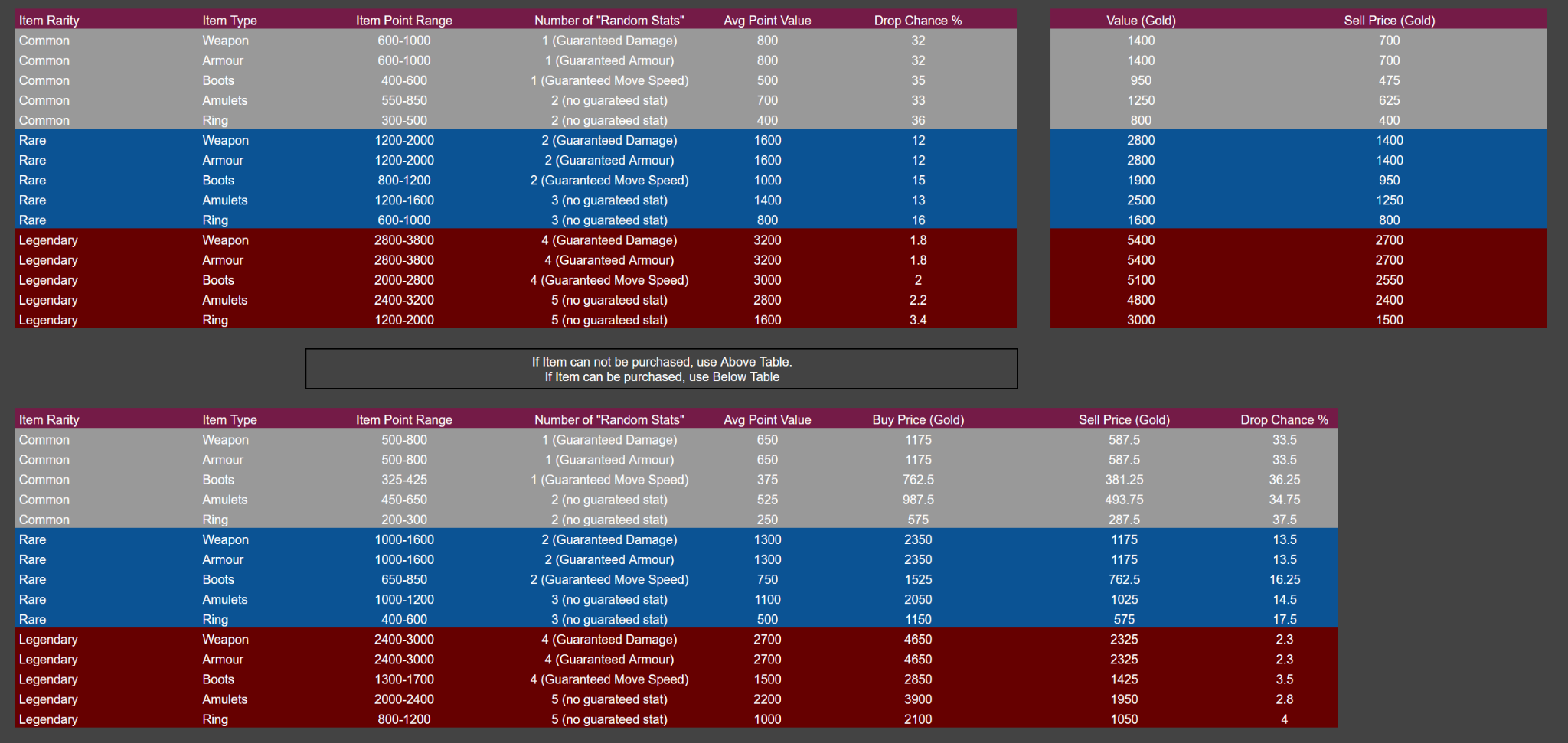 Rarity, value, and drop rules.
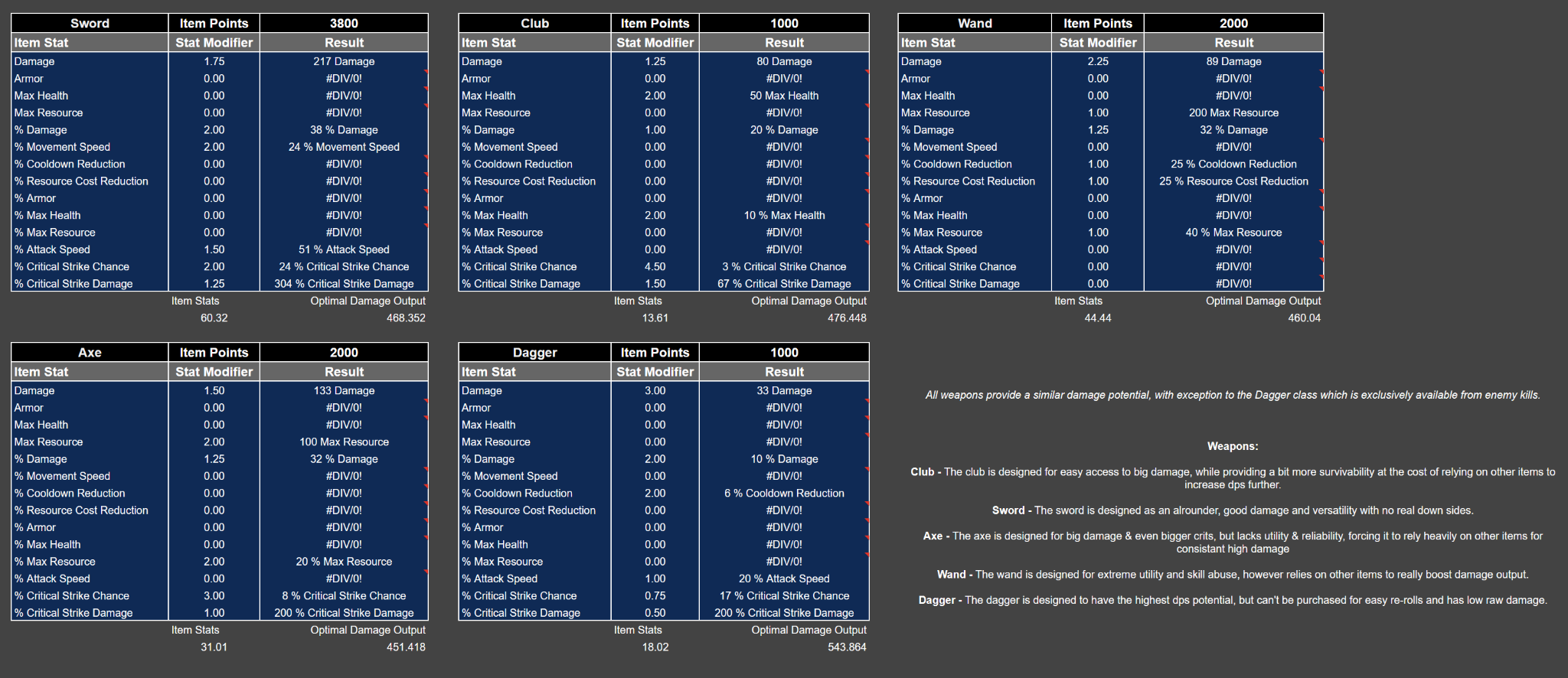 Distinct weapon profiles, comparable output.
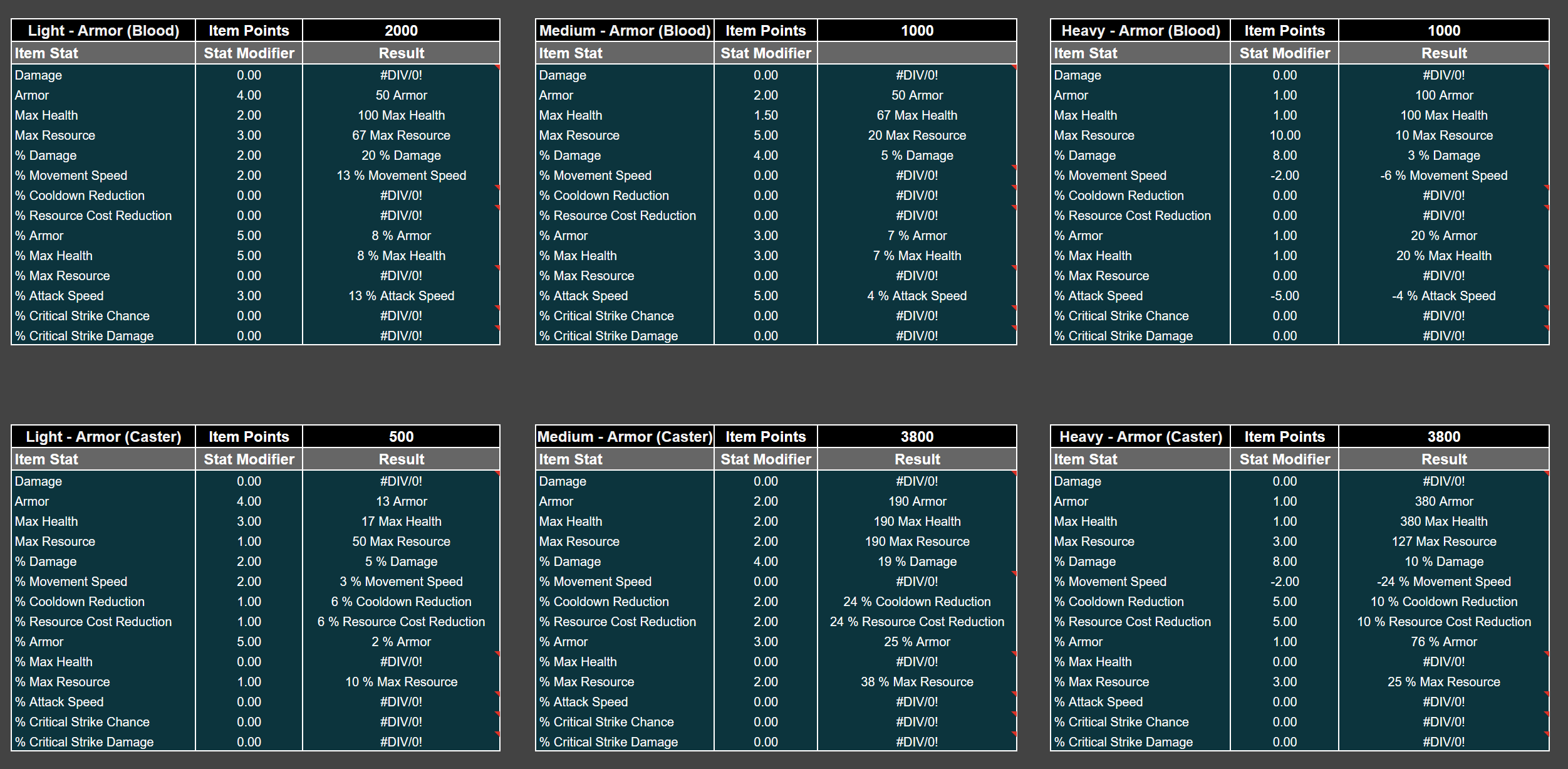 Armour profiles for different roles.
Evidence 01 / 05
Rules applied in the item editor.
Common, rare, and legendary examples use the same editor structure while increasing available stat ranges and random-stat counts.
The selected drop-only items also show the individual icons and flavour text used to distinguish exclusive rewards.
Evidence 1 of 5: Rules applied in the item editor.