Project overview
Eco Defenders is an educational tower-defence game for children aged 10–12, designed to introduce the environmentally responsible and renewable side of construction through an eco-point economy, placement trade-offs, and escalating pollution pressure.
- UnityGame implementation
- C#Gameplay systems
- Visual StudioDevelopment environment
- Git / GitHubTeam version control




Supporting detail
The supporting material is deliberately compact: it connects the decisions, system boundaries, and lessons without competing with the primary project evidence.
Academic project
The design challenge.
The assignment was to create an educational game for children aged 10–12 that introduced the environmentally friendly and renewable side of the construction industry.
The design challenge was to translate that topic into rules younger players could understand through play rather than relying on separate instruction.
Design direction
How the problem was approached.
- 01
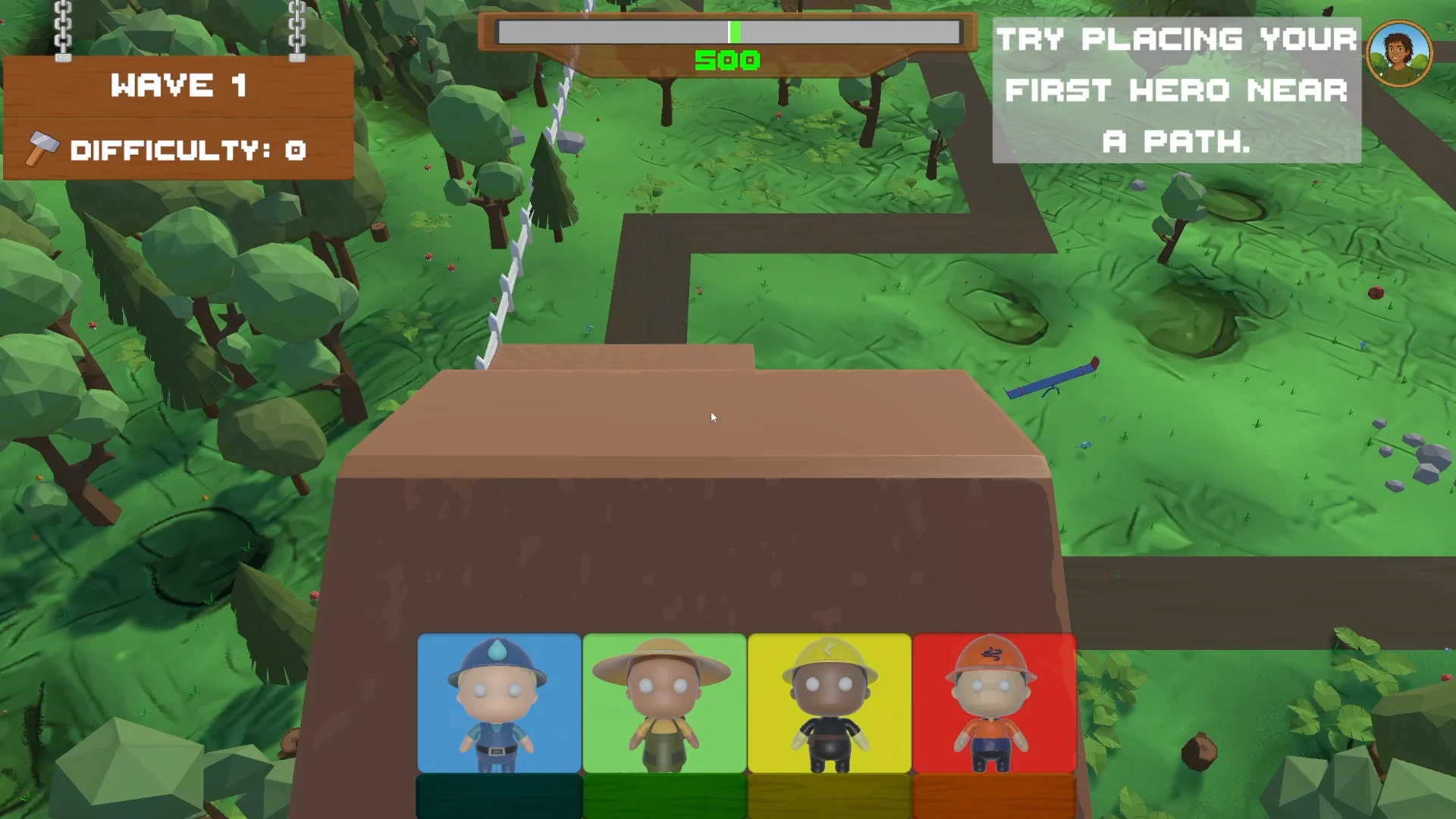
Use positive eco points as the player's environmental currency, with the Eco Assistant introducing the economy and first placement in a clear, low-pressure way.
- 02
Make wave timing respond to performance so quick clears bring the next wave sooner while slow clears can allow multiple waves to overlap and maintain pressure.
- 03
Use a placement-bias system that penalises adjacent towers of the same type, rewards different neighbouring towers, and provides contextual assistant tips after weak placements.
- 04
Connect the Polluted fail state to the player's ability to balance eco towers, placement decisions, and eco upgrades.
Project focus
The core areas.
Reflection
What this work adds.
Eco Defenders shows how an educational theme can be carried by an interconnected economy, pacing, placement, guidance, and consequence system rather than presented outside the play loop.
The design aims to introduce environmentally responsible construction through play; establishing its learning effectiveness would require testing with the target audience.
Supporting evidence
Environmental choices made playable.
These captures show how Eco Defenders translates its educational intent into rules children can act on.
Designed for ages 10–12, the game frames environmentally responsible and renewable approaches to construction through an eco-point economy, guided placement feedback, performance-responsive wave pacing, and a Polluted fail state.
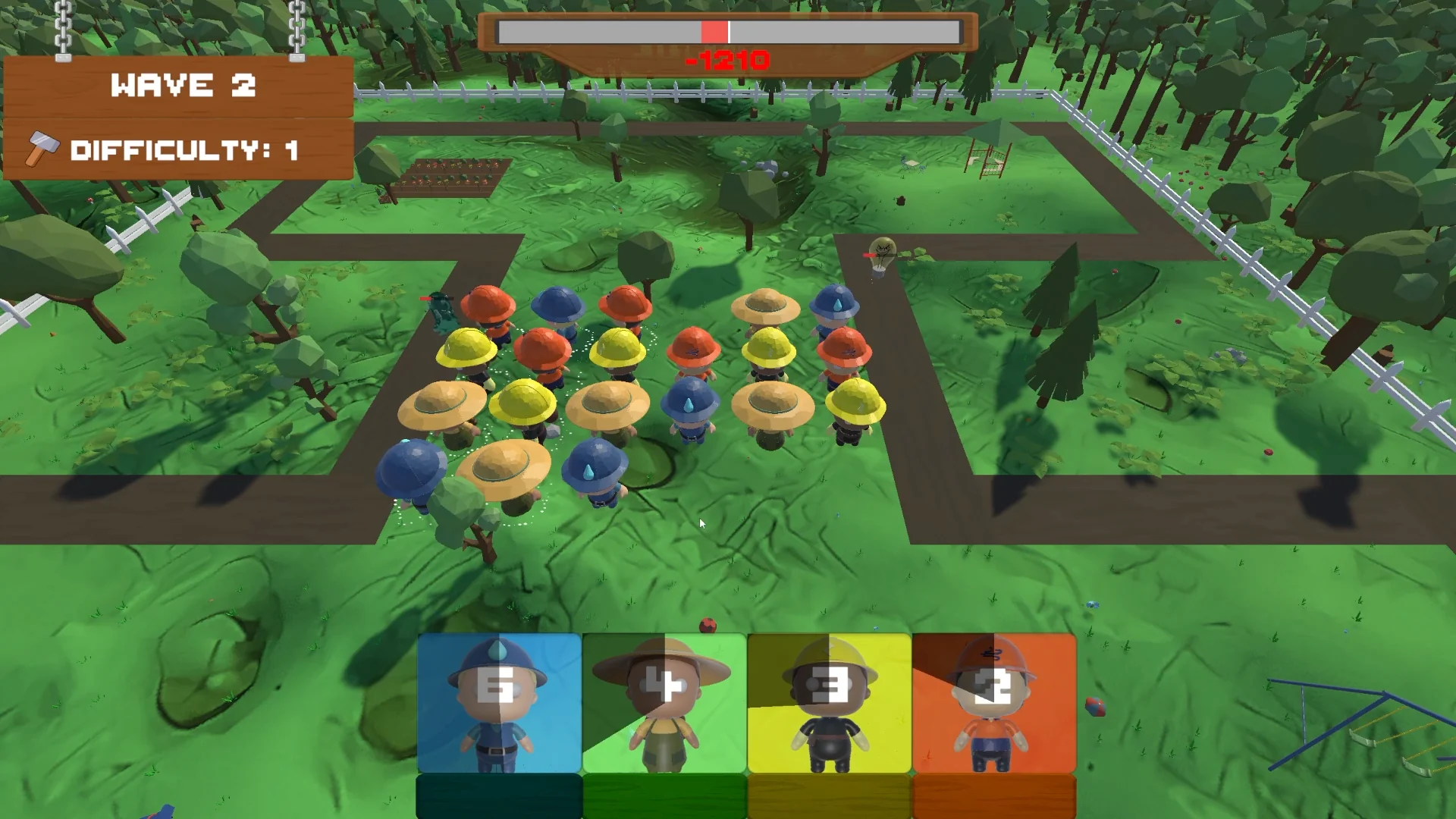 Wave pressure follows player performance.
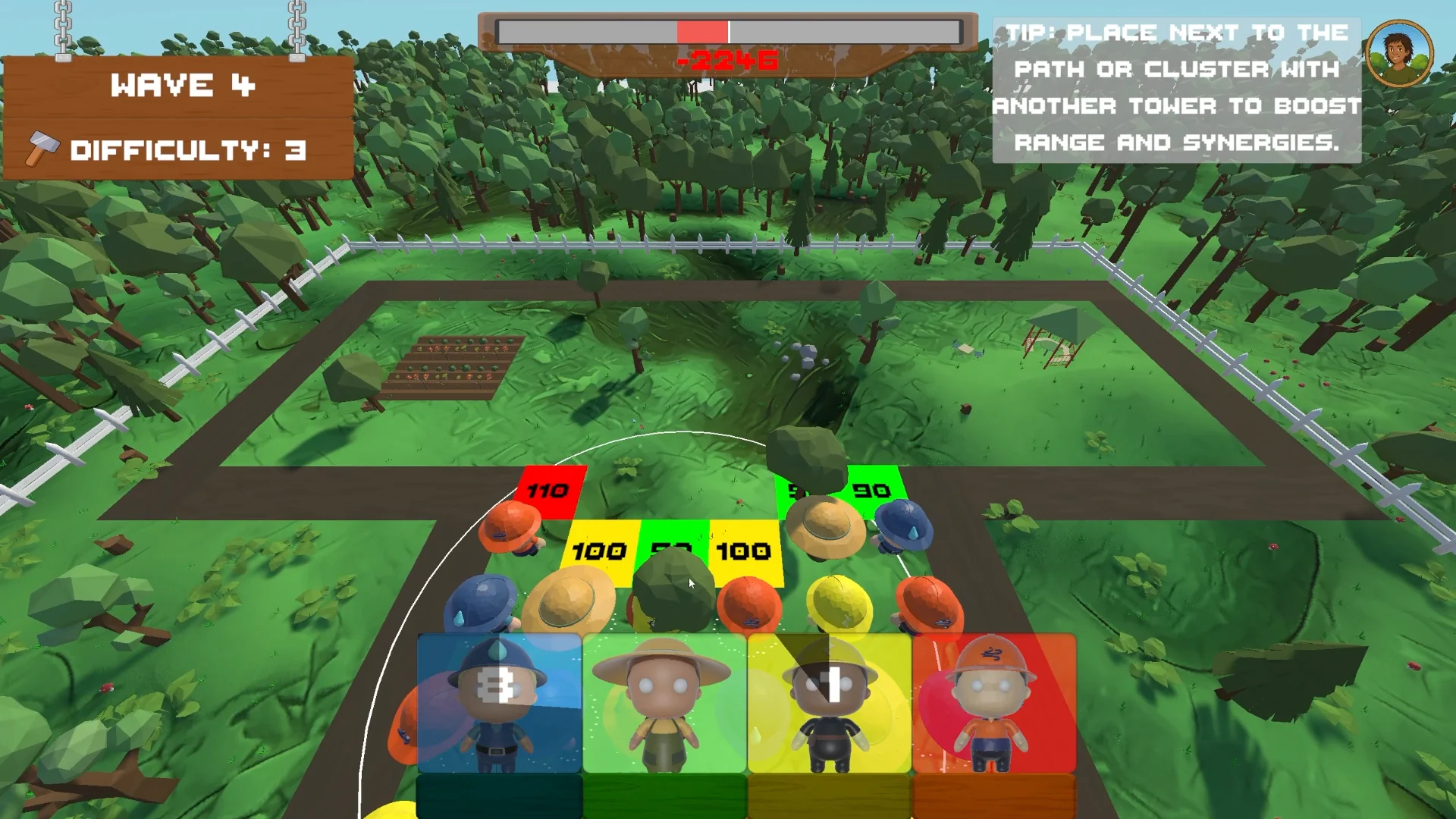 Placement rewards variety, not repetition.
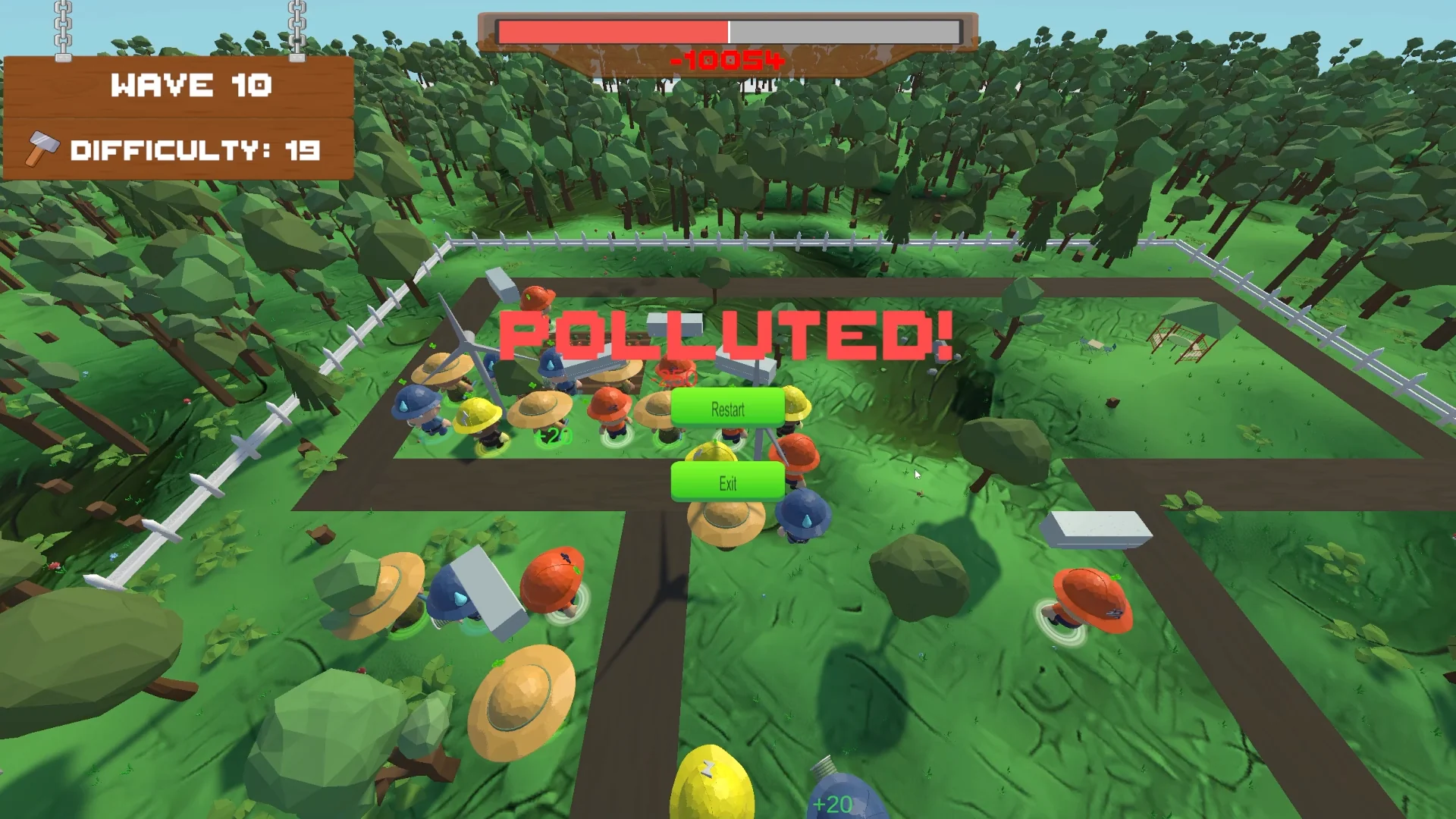 Failure becomes an environmental consequence.
Evidence 01 / 04
The opening introduces eco decisions.
The opening combines the eco-point economy with the Eco Assistant.
A positive starting balance presents eco points as the player's environmental currency, while the assistant gives a clear first placement objective.
These systems work together to help players aged 10–12 understand both what to do and that every tower affects their environmental budget.
Evidence 1 of 4: The opening introduces eco decisions.