Project overview
Following a catastrophic event during a deep-space research expedition, the player wakes from hibernation inside a damaged escape pod on the return to Earth.
Drawn to Life is a systemic VR survival puzzle in which the player repairs the pod's infrastructure, installs a battery in the power unit, activates it, and physically routes life support, navigation, and propulsion to main power.
Diegetic controls and environmental feedback support immersion by making the pod's condition something the player sees, hears, and physically responds to within the VR space, while the final state feeds a systemic outcome generator capable of producing more than 300 possible report variations.
- UnityVR systems and scene implementation
- C#Gameplay and connected system logic
- Visual StudioDevelopment environment
- Git / GitHubTeam version control




Supporting detail
The supporting material is deliberately compact: it connects the decisions, system boundaries, and lessons without competing with the primary project evidence.
Academic project
The design challenge.
The project responded to the academic theme Draw Reality.
I chose the theme because I value games that give players creative freedom, interpreting 'draw' as the hand of fate the player receives and the reality their decisions create.
The design challenge was to make a damaged escape pod readable and repairable in VR without relying on a conventional HUD or prescribing one correct sequence.
Design direction
How the problem was approached.
- 01
Build the experience around a repeated loop of detecting faults, repairing infrastructure, routing power, operating systems, and stabilising the pod.
- 02
Require the player to install a battery, activate the main power unit, and physically route life support, navigation, and propulsion to main power before those systems can operate.
- 03
Keep system state and interaction feedback in the world through physical controls, displays, lighting, sound, and environmental effects.
- 04
Record the final pod and player state as a future recovery or salvage report, turning decisions, compromises, and failures into narrative consequences.
Project focus
The core areas.
Reflection
What this work adds.
Leading the design and implementing its connected systems showed me that VR immersion depends on consistency between rules, physical interaction, feedback, and consequence.
The outcome generator was especially valuable: more than 300 possible report variations can emerge from tracked system state without treating every ending as a separately handcrafted scene.
Supporting evidence
Systems made visible.
These artefacts explain how each system was built, why it was designed that way, and what it gives the player: embodied power restoration, immersive oxygen and exterior feedback, structured audio, and personalised outcome reports.
The final two artefacts connect those systems to the original design intent and document my contribution within the team.
 Oxygen loss is felt, not just displayed.
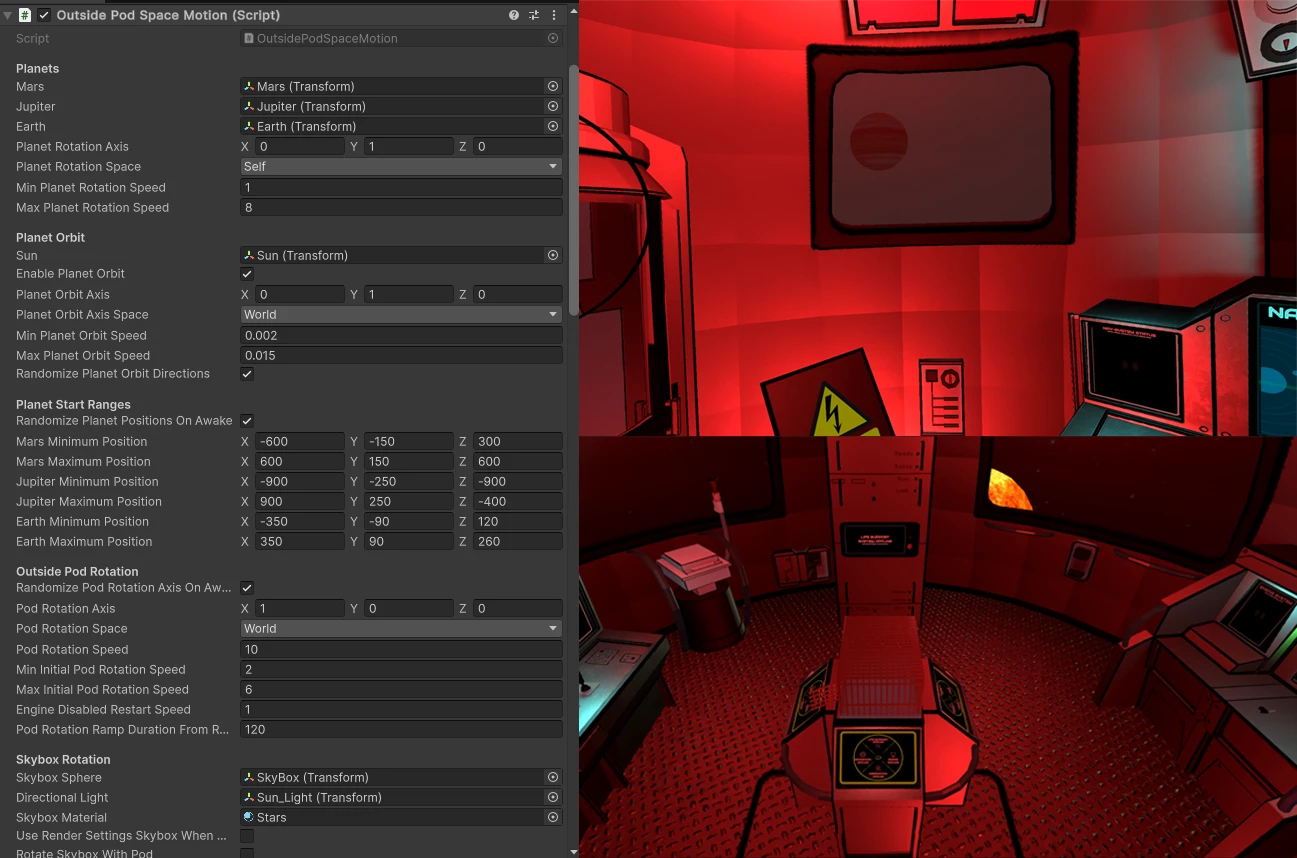 The exterior reveals the pod's stability.
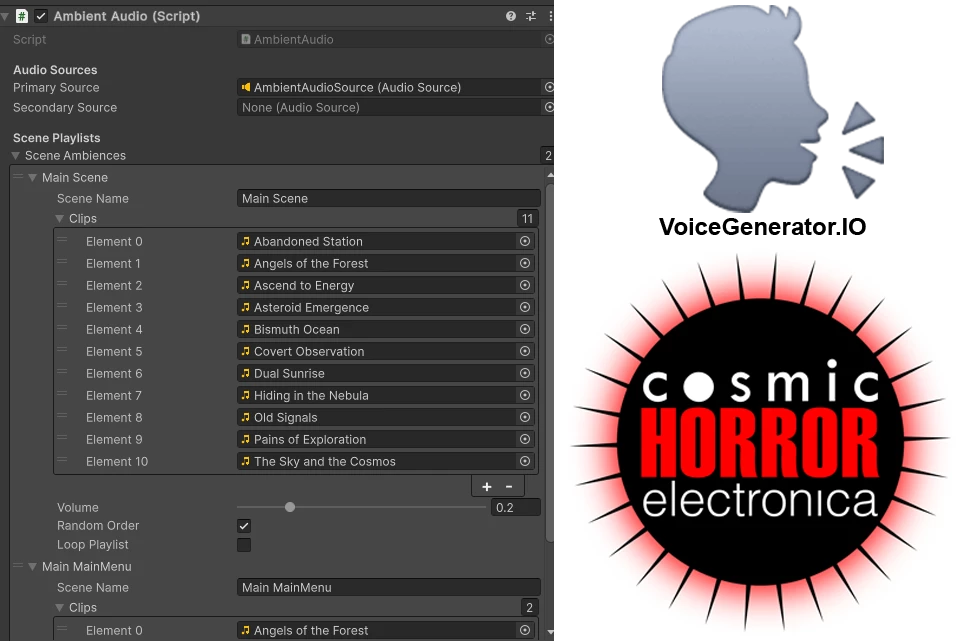 Audio adapts to the current moment.
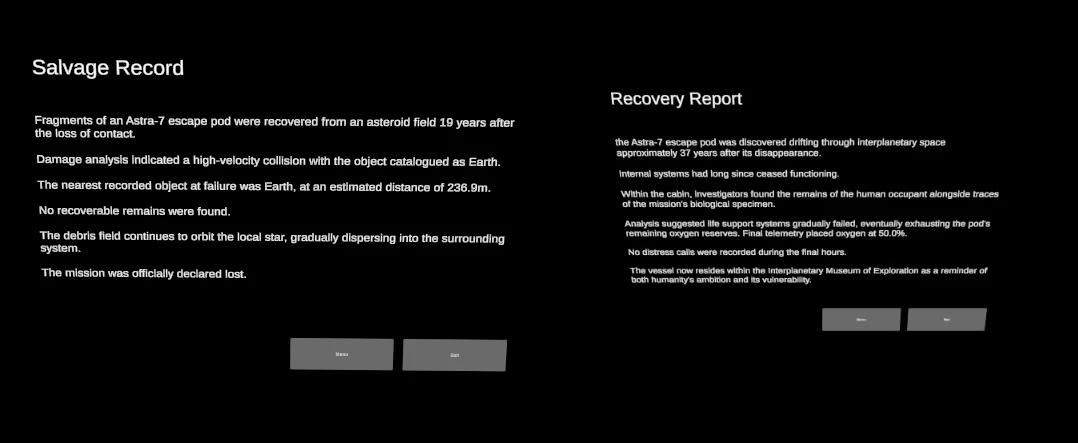 Each outcome records the player's decisions.
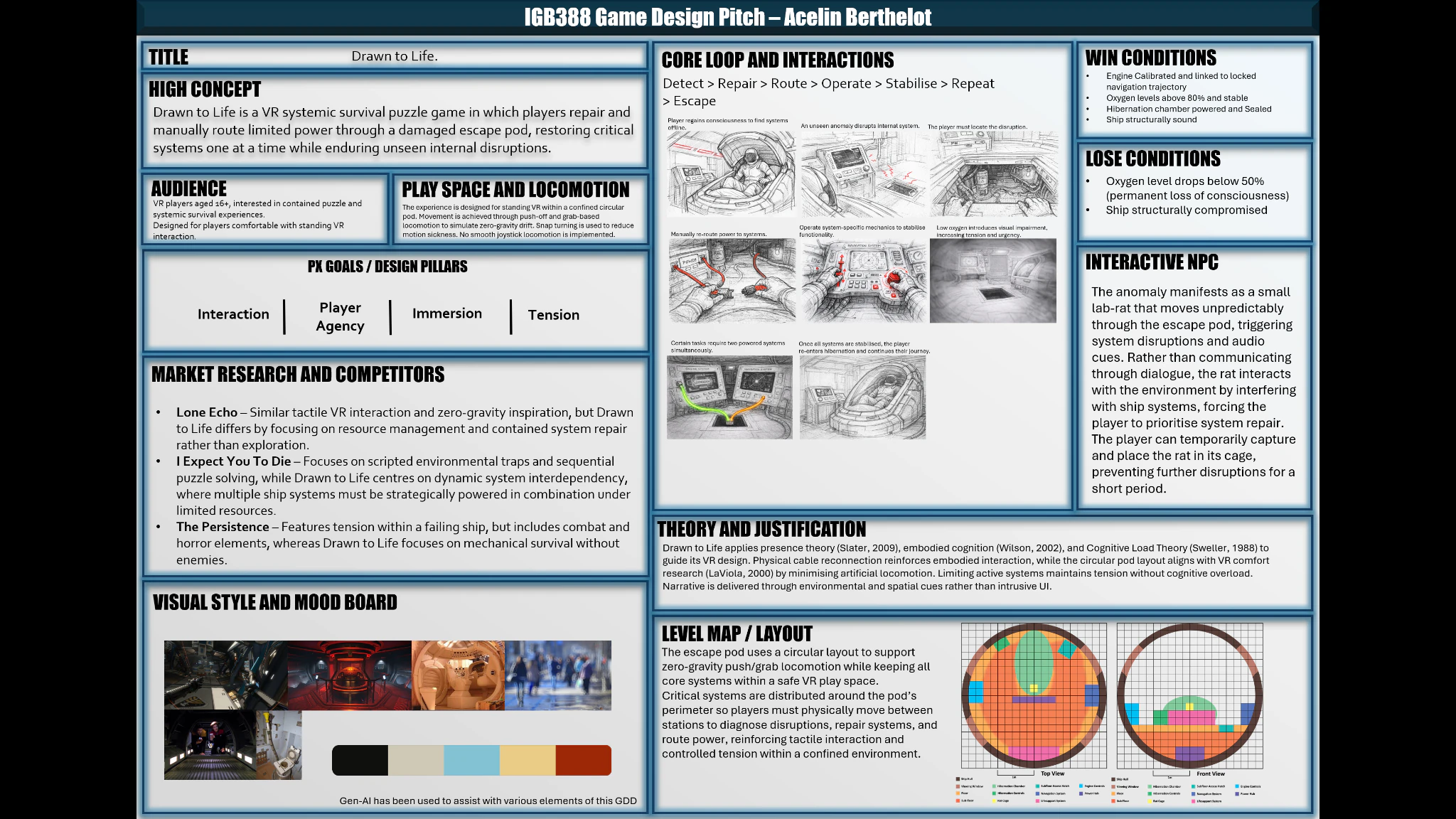 The concept established one connected loop.
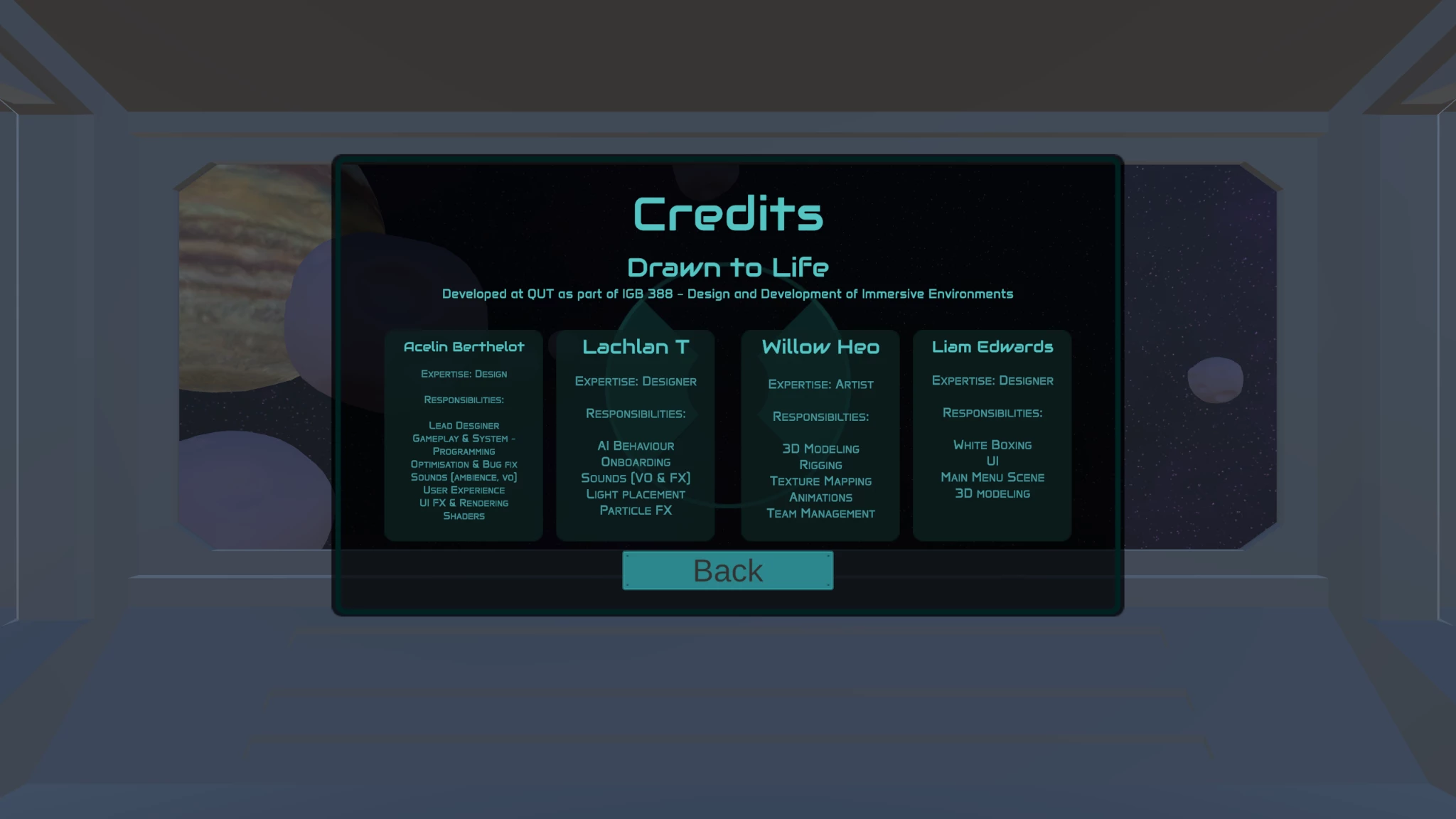 My contribution connected the experience.
Evidence 01 / 07
Power restoration becomes physical.
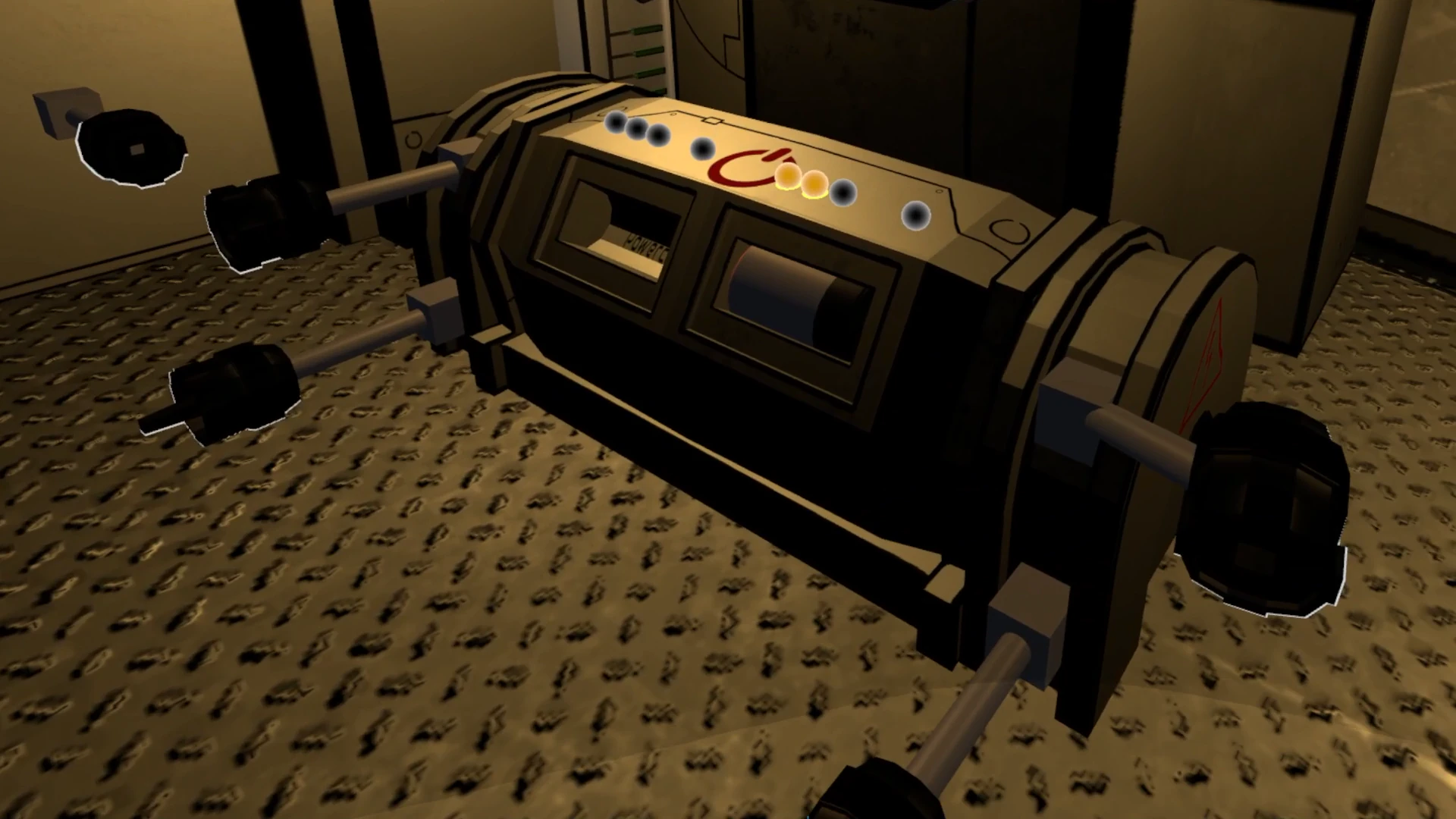
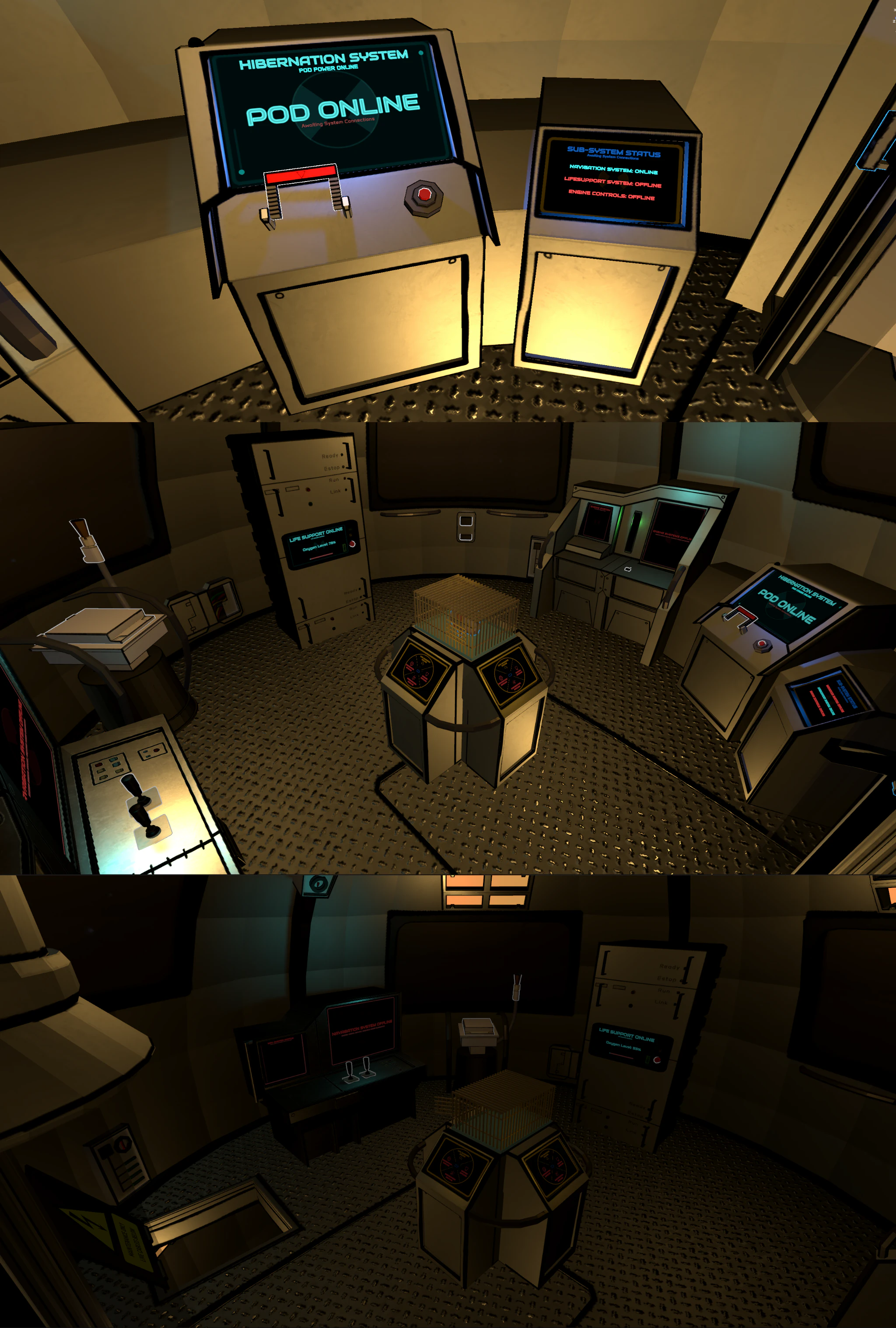
The power system turns restoration into a hands-on VR sequence: the player inserts a battery, activates the main unit, and physically routes life support, navigation, and propulsion to main power.
I designed this to replace an abstract menu or automatic repair with visible cause and effect inside the pod.
Handling each stage helps the player understand how the connected systems operate while keeping the repair process grounded in the VR space.
Evidence 1 of 7: Power restoration becomes physical.